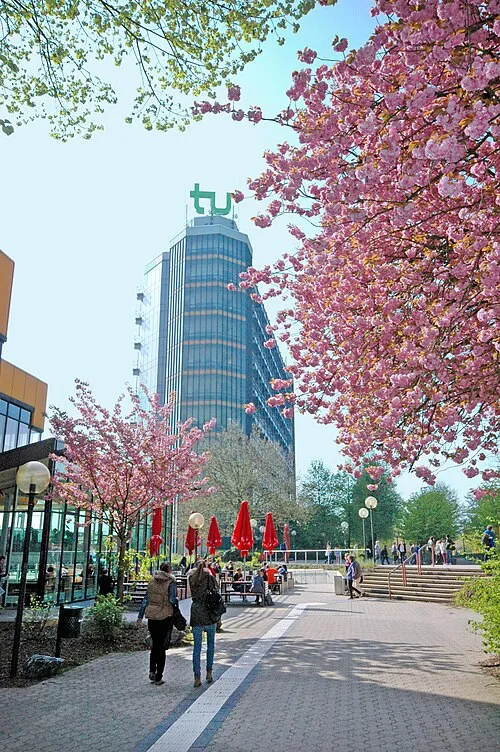

Technische Universität Dortmund
TU Dortmund University
Technische Universität Dortmund (TU Dortmund) is a large public university in the Ruhr region with around 30,000 students. This page first explains the official route for applicants without a C1 certificate, then accepted certificates, the application channel and deadlines.
Short answer: with German up to B1, TU Dortmund gives you a letter of access to a German course, not degree admission. Applicants with B2 who apply for an admission-free programme can hand in the C1 certificate at enrolment. German-course students must apply again for the degree.
Quick Facts
- University Name
- Technische Universität Dortmund
- City
- Dortmund
- State
- Nordrhein-Westfalen
- Type
- Teknik Üniversite (öffentlich-rechtlich)
- Founded
- 1968
- Student Enrollment
- 29.454
- How to apply
- uni-assist (Bachelor's and Master's)
- Without a German certificate
- Access to a German course; new application for the degree
Short answer: which route is there if your German is not good enough?
TU Dortmund's official page (we follow the German version, which is clearer than the English one) distinguishes three cases:
- German up to B1: you receive a letter of access to a language course (Zugangsbescheid zum Sprachkurs).
- B2 and an admission-free programme: you may hand in the German certificate at enrolment. If that is not possible, you can enrol as a German-course student for the semester you applied for and the following one.
- B2 and an NC programme: if you do not submit C1 by the application deadline (15 July for the winter semester), you only receive access to a language course; the certificate cannot be submitted later.
Important limits:
- Enrolment as a German-course student is voluntary, and you cannot attend lectures or take exams.
- TU Dortmund offers no preparatory German courses; you find a course elsewhere (it can also be outside Germany).
- Once you have sufficient proof of German, you must apply again within the deadline.
To compare with other universities, see universities offering conditional admission in Germany.
Language requirement and accepted certificates
Certificates TU Dortmund accepts include the DSH (level 2 or 3), TestDaF with at least 16 TDN in total and telc Deutsch C1 Hochschule. The certificate is normally due by the application deadline; for admission-free programmes it can be submitted at enrolment.
Our guide to German language certificates compares the exams.
Application steps, deadlines and costs
- Bachelor's and Master's (non-EU): through uni-assist ("My assist"); your status and the decision then appear in TU Dortmund's Campus Portal.
- Winter semester: German-taught programmes approx. mid-March to 15 July; English-taught programmes approx. early January to 15 May.
- Summer semester: all programmes approx. early November to 15 January. Some Master's programmes (e.g. Raumplanung) have different deadlines.
- Costs: the semester contribution for winter semester 2026/27 is €339.70. There is no general tuition fee; according to the official page a few programmes charge tuition.
- Visa: the German-course page says nothing about visas; a letter of access to a language course is not a visa guarantee.
English-taught Master's examples
TU Dortmund also runs English-taught Master's programmes. Two examples from the official programme pages:
- Medical Physics and Physics of Living Systems (M.Sc.) — taught entirely in English
- Data Science in Sports and Health (M.Sc.)
The winter-semester deadline for English-taught programmes is earlier (15 May); the German-course route concerns German-taught programmes.
Technische Universität Dortmund: A Hub for Innovation
Technische Universität Dortmund is a well-established educational institution located in the Ruhr region, often considered the heart of industry and technology in western Germany. Founded in 1968, the university quickly became one of Germany's leading technical universities. It offers a broad spectrum of education, particularly in engineering sciences, natural sciences, educational sciences, social sciences, and economics.
The university played a pioneering role in the development of the internet in Germany and has made significant contributions to current fields like machine learning. With approximately 30,000 students, TU Dortmund is recognized not only regionally but also nationally and internationally for its scientific research and academic achievements. Its modern campuses, state-of-the-art laboratories, and dynamic research environment provide an inspiring learning atmosphere for students. The university aims to educate qualified graduates who can adapt to a constantly changing world and meet future needs.
Study and Research Areas
TU Dortmund offers a total of 83 different programs, including 33 bachelor's and 49 master's programs. These programs cover a wide range, from engineering to architecture, computer science to chemistry, physics to statistics. Fields like mechanical engineering, computer science (Informatik), and electrical engineering are particularly popular among international students.
The university embraces an educational philosophy that combines theoretical knowledge with practical applications. Students have the opportunity to gain in-depth knowledge and experience in their fields by actively participating in modern laboratories and research projects. TU Dortmund also welcomes students who wish to contribute to scientific research through its doctoral programs.
The university's strong research-oriented structure allows students to closely follow current scientific developments and even contribute to them. With its International Dortmund identity, the university provides support services for international students, and some master's programs are taught in English.
Student Life and the City of Dortmund
Dortmund is not only one of Germany's largest cities but also boasts a vibrant student identity. Located in the heart of the Ruhr region, the city offers students a rich life with cultural events, green spaces, and sports activities. TU Dortmund's modern campuses, with easy access to the city center, facilitate both the academic and social lives of students.
The city offers numerous student dorms, shared apartments (WG), and affordable accommodation options. Various platforms and student communities offer support, especially for students looking for an apartment or WG in Dortmund and its surroundings. The city is also known for hosting Signal Iduna Park, one of Germany's largest football stadiums.
Students can use public transport within the North Rhine-Westphalia state for free or at a heavily discounted rate thanks to the Semesterticket (semester ticket), which significantly reduces transportation costs. Dortmund offers an open and welcoming environment for international students, making their study in Germany experience unforgettable.
Monthly Cost of Living (Estimated)
Places to Visit and Student Hangouts
With its modern architecture and extensive resources, it's a preferred center for students to study and conduct research.
Details ↗This iconic former brewery now serves as a center for art, culture, and creativity.
Details ↗One of the city's largest parks, it's an ideal green space for relaxing, exercising, and attending various events.
Details ↗The legendary stadium of the Borussia Dortmund football team, a must-see for football-loving students.
Details ↗TU Dortmund's two main campuses offer a lively student environment with modern buildings, student centers, and green spaces.
Details ↗Student Life and Culture
Technische Universität Dortmund offers its students not only an academic experience but also a rich social and cultural life. There are numerous student clubs and societies both on campus and throughout the city. These clubs bring students together around sports, music, theater, international student events, and various hobbies, allowing them to socialize and form new friendships.
Orientation programs and events, especially for international students, help newcomers adapt to the city and the university. Dortmund's student-friendly atmosphere is supported by cafes, bars, and cultural venues. The student union (AStA) not only advocates for student rights but also organizes various social and cultural events, further enriching campus life. With its International Dortmund spirit, students from diverse cultures come together to create a global learning and living environment.
- Wide range of student clubs and societies
- Free public transport within the state with your Semesterticket
- Lively student cafes and bars
- International student office and support services
- Multicultural and inclusive campus environment
Frequently Asked Questions
Does TU Dortmund offer conditional admission? ▼
It gives access to a German course, not admission to the degree. Applicants with German up to B1 receive this letter; German-course students cannot attend lectures and apply again for the degree once they have the certificate.
What happens if I apply with B2? ▼
For an admission-free programme you can hand in the C1 certificate at enrolment. For an NC programme, C1 must be submitted by the application deadline (15 July for the winter semester); otherwise you only receive access to a language course.
Which German certificates does TU Dortmund accept? ▼
Among others the DSH (level 2 or 3), TestDaF with at least 16 TDN in total and telc Deutsch C1 Hochschule.
Do I apply through uni-assist? ▼
Yes. Non-EU applicants apply for Bachelor's and Master's programmes through uni-assist; the decision later appears in TU Dortmund's Campus Portal.
Next step: check in the programmes tab on this page whether your programme is NC-restricted, then confirm the route on TU Dortmund's official German course page. For other universities, see our conditional admission comparison.
Technische Universität Dortmund — Gallery
Useful Links
Location

Programs & Departments
165 active programs · 68 NC-frei
This list shows the programmes in our catalogue and may be incomplete. Check the official programme page for the current list and the language of instruction.
Showing 97–120 of 165 programs
Master
Philosophy and Political Science
DEMaster of Arts (M.A.)
The M.A. in Philosophy and Political Science (MAPP) brings philosophical and political science perspectives together systematically and fosters networked global thinking and intercultural understandin...
View details →Physics (Master of Science )
ENMaster of Science (M.Sc.)
Physics tries to measure quantifiable natural phenomena by means of specific experiments and to describe them theoretically by means of the simplest possible fundamental models. The Master's degree pr...
View details →Process Systems Engineering
ENMaster of Science (M.Sc.)
Process Systems Engineering is a specialized Master's program that enables students to work on the design and operation of complex chemical and biochemical production systems using mathematical models...
View details →Psychology
DEMaster of Science (M.Sc.)
The four-semester Master's degree programme in Psychology provides further professional qualification. Graduates demonstrate specialist psychological knowledge and methodological skills to investigate...
View details →Real Estate and Construction Management
DEMaster of Science (M.Sc.)
Students expand their knowledge of products and processes along the whole building life cycle. They learn how to guide all the parties involved in a project and acquire comprehensive methodical and pr...
View details →Rehabilitation Sciences
DEMaster of Arts (M.A.)
The Rehabilitation Sciences degree program is a consecutive Master's degree program that deepens specialist knowledge and scientific working methods for fields of work with rehabilitation pedagogical...
View details →Religion, Ethics, and Politics
ENMaster
The tense relationship between religion and politics is one of the most important social issues of our time. Societal and scientific debates on the issue have been triggered by increasing religious pl...
View details →Religion, Ethics, and Politics
ENReligion, Ethics, and Politics
View details →Science Journalism
DEMaster of Arts (M.A.)
Master's students look at the field of science journalism more from a research perspective after having been prepared for professional practice in the bachelor's phase. The Master's degree program can...
View details →Sociology (Master of Arts )
DEMaster of Arts (M.A.)
In the Master's degree Sociology, the department profile "Life in Transformation" is deepened in various areas: future of work, sustainability, mobility patterns, challenges of aging societies. The pr...
View details →Spatial Planning
DE+ENMaster of Science (M.Sc.)
The Master's degree program serves, in particular, to prepare students for a career in international science and research, but also for management functions in those areas of professional practice in...
View details →Spatial Planning for Regions in Growing Economies (SPRING)
ENMaster
SPRING combines intensive training in development theories and strategies, planning concepts and methods, and implementation and monitoring tools with practice-oriented field studies aimed at elaborat...
View details →Spatial Planning for Regions in Growing Economies (SPRING)
ENSpatial Planning for Regions in Growing Economies (SPRING)
View details →SPRING - Spatial Planning for Regions in Growing Economies
ENMaster of Science (M.Sc.)
The SPRING program seeks to teach students the following knowledge and skills: Broad intersectoral knowledge and skills across three major areas of regional development planning: Natural resource plan...
View details →Statistics (Master of Science )
DEMaster of Science (M.Sc.)
The Master's in Statistics builds on the Bachelor's degree program in Statistics. Taking into account the demands and changes in the professional world, teaching and learning are designed to equip stu...
View details →Sustainable Energy and Hydrogen Infrastructures
ENMaster of Science in Sustainable Energy and Hydrogen Infrastructures
View details →Sustainable Energy Systems
ENMaster of Science (M.Sc.)
The Sustainable Energy Systems program prepares students for work in the broad field of energy system transformation towards a climate-neutral, economic and supply-secure future. The main technical pe...
View details →Sustainable Energy Systems
ENSustainable Energy Systems
View details →Technomathematics
DEMaster of Science (M.Sc.)
The Master's degree program in Technomathematics provides graduates with the expertise needed for a challenging career in industry and business or in public service. Many technical processes are not i...
View details →Technomathematics (Industrial Mathematics)
ENTechnomathematics (Industrial Mathematics)
View details →Other
Bachelor
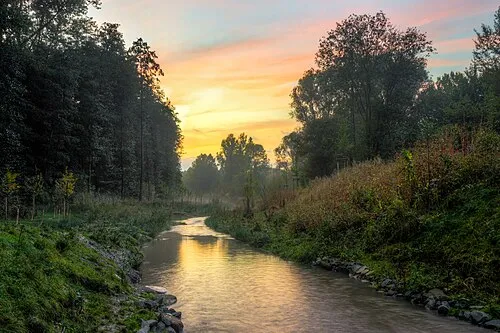
Dortmund
State: North Rhine-Westphalia
University Education in Dortmund: Why Should You Choose It?
Dortmund is an attractive hub for students who want to pursue a university education in Germany. The city's 6 public universities offer a wide range o...
more →Student Life and Social Scene in Dortmund
Dortmund isn't just known for its academic achievements; it also boasts a vibrant student life. With its young population and multicultural makeup, th...
more →Student Life and Culture
Thanks to its young and energetic population, Dortmund has a lively student culture. Student clubs, sports teams, and cultural events at the universit...
more →More about Dortmund
Cost of living, housing, transport, student life and all universities.
Student Experiences
Share yours too →No experience shared yet.
Be the first to share an experience about Technische Universität Dortmund and help other students.
Share your experienceOther universities in Dortmund
All →
Fachhochschule Dortmund
13,315 students
International School of Management (ISM)
3,728 students
 Public
Folkwang Universität der Künste
1,615 students
 Public
Fernuniversität in Hagen
63,410 students
 Public
Technische Universität München
55,562 students
 Public
Ludwig-Maximilians-Universität München
53,609 students
Student Reviews
Verified reviews from current students, alumni and applicants.
No reviews yet. Be the first!
Verified students and alumni can share their experience below.