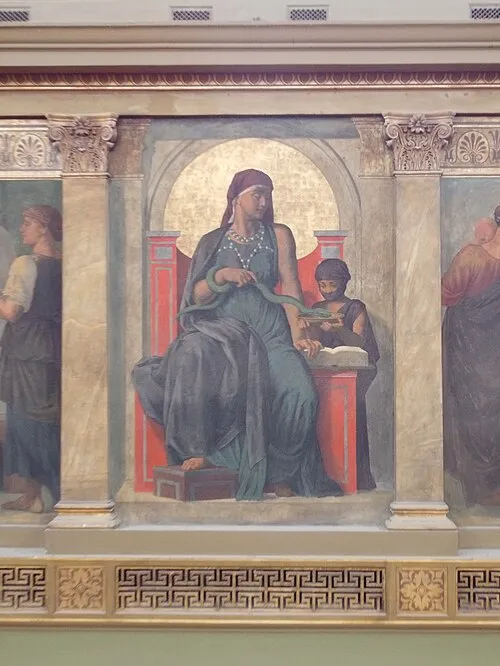

Martin-Luther-Universität Halle-Wittenberg
If you're a Turkish student dreaming of studying in Germany, Martin-Luther-Universität Halle-Wittenberg (MLU) stands out as a significant educational institution, known for its rich history and modern academic structure. Located in the cities of Halle (Saale) and Wittenberg, this prestigious university is the largest and oldest state university in the state of Saxony-Anhalt. MLU, which took its current form in 1817 with the merger of Leucorea (founded in 1502) and Friedrichs-Universität (founded in 1694), is named after the reformer Martin Luther.
As one of the key centers of Pietism and the Enlightenment, it has made significant contributions to Germany's scientific and cultural development. With Nobel laureates in medicine, chemistry, and physics among its alumni, Martin-Luther-Universität Halle-Wittenberg shapes the scientific world. It offers a wide range of bachelor's and master's programs, promising international students a rich academic experience. If you're looking to study in Germany, MLU is definitely an option you should consider, both for its academic quality and its student-friendly cities.
Quick Facts: Martin-Luther-Universität Halle-Wittenberg
- University Name
- Martin-Luther-Universität Halle-Wittenberg (MLU)
- Cities
- Halle (Saale) and Wittenberg
- State
- Saxony-Anhalt
- University Type
- State Research University
- Founding Year
- 1502 (merged 1817)
- Number of Students
- Approx. 18,727
- Total Programs
- 300 (112 Bachelor's, 94 Master's)
- HRK Membership
- Yes
- Uni-Assist Membership
- No
- Official Website
- uni-halle.de
Rich History and Scientific Legacy
Martin-Luther-Universität Halle-Wittenberg is one of Germany's oldest and most respected universities. Its history dates back to the merger in 1817 of Wittenberg University (Leucorea), founded in 1502, and Halle Friedrichs-Universität, founded in 1694. With the unification of these two institutions, Halle became one of Germany's most important university cities, especially as a center for the Pietism and Enlightenment movements in the 17th and 18th centuries.
The university was named in 1933, in honor of the 450th birthday of the reformer Martin Luther. MLU's scientific legacy is incredibly rich; it has produced four Nobel laureates: Emil von Behring in medicine, Hermann Staudinger and Karl Ziegler in chemistry, and Gustav Hertz in physics. It has also been home to prominent academics like Kurt Mothes, former president of the German Academy of Sciences Leopoldina. This deep-rooted past continues to position MLU as a leader in research and education today.
Academic Diversity and Innovative Approaches
Martin-Luther-Universität Halle-Wittenberg offers a wide range of bachelor's, master's, and doctoral degree programs, providing students with rich academic opportunities. The university offers over 300 program options in total, with 112 bachelor's and 94 master's programs. These programs cover many different disciplines, from humanities to natural sciences, law to theology.
MLU offers students the opportunity to pursue their studies in both German and through international English-taught programs. As a research-focused state university, it offers students the chance to follow current scientific developments and participate in their own research. With its modern laboratories, extensive library resources, and experienced academic staff, Martin-Luther-Universität supports students in developing critical thinking, problem-solving, and innovative approaches. Among Turkish students, fields like engineering, computer science, and natural sciences are particularly popular, and MLU has strong programs in these areas.
Estimated Monthly Cost of Living - Halle (Saale)
Places to Visit and Student Hangouts
This historic complex, a center of Pietism, is an important part of Halle's cultural heritage, featuring schools, an orphanage, and libraries.
Details ↗The heart of Halle, this square houses iconic structures like the Marktkirche (Market Church) and the Roter Turm (Red Tower).
This university-owned botanical garden is an ideal place to relax between classes or explore nature.
Details ↗One of Germany's oldest science academies, Leopoldina hosts scientific events and exhibitions.
Details ↗The house where Martin Luther lived and worked, this is an important museum for Reformation history.
Details ↗The home of Philipp Melanchthon, a close friend of Martin Luther, this is another important museum shedding light on the Reformation era.
Details ↗Student Life and Culture
With campuses in two different cities, Martin-Luther-Universität Halle-Wittenberg offers its students a unique experience. Halle (Saale) stands out with its vibrant student population, affordable cost of living, and rich cultural events, while Wittenberg offers a more historic and tranquil atmosphere. The university supports students' social and cultural development alongside their academic achievements.
You'll find numerous student clubs and societies catering to various interests like sports, music, theater, and international student initiatives. These clubs help students connect and form new friendships. Cycling is very common in Halle and often preferred for inner-city transportation.
Events, parties, and cultural excursions organized by the student council (Studierendenrat - StuRa) offer many opportunities for students to enjoy their free time. Additionally, thanks to the Semesterticket (semester public transport pass), students can usually use public transport within the Saxony-Anhalt state for free or at very affordable prices, making it easy to explore surrounding cities.
- Affordable cost of living and vibrant student environment in Halle
- Numerous student clubs and societies for social activities
- Public transport advantages within the state with the Semesterticket
- Campus experience in two different cities (Halle and Wittenberg)
- Strong cycling culture, practical inner-city transportation
Frequently Asked Questions (from Turkish Students)
Are German diplomas and transcripts with an apostille mandatory? Are English translations accepted? ▼
Generally, for universities in Germany, documents in German or English are acceptable. However, since Martin-Luther-Universität Halle-Wittenberg is not a member of Uni-Assist (a central application service for international students), you will apply directly to the university. The university's admissions office (International Office) usually accepts English documents, but in some cases, a German translation and sworn translator's certification might be required. An apostille confirms the international validity of the document and is often requested. Before applying, it's best to check the 'International Application' or 'Admission Requirements' sections on MLU's official website or contact the International Office directly.
How do you arrange a rental contract for a spouse and child visa, and what's the cost? ▼
For students wishing to come to Germany with a spouse and children, finding accommodation and securing a rental contract is a crucial step. The rental contract serves as proof of accommodation during your visa application. You can start your apartment search online (on sites like ImmobilienScout24, WG-Gesucht) or through local real estate agents before arriving in Germany. While rents in Halle are more affordable than in Germany's larger cities, a 2-bedroom or 3-bedroom apartment for a family could range from 600-1000 Euros, depending on location and size. Additionally, you'll have initial costs like a security deposit (Kaution – usually 2-3 months' rent) and possibly a real estate agent's commission. Managing this process from Turkey can be challenging, so if you have an acquaintance in Germany, asking for their help or arranging temporary accommodation and finding a permanent place after you arrive might be more practical.
Insurances like Dr. Walter, Expatio are too expensive; we can get cheaper options with Allianz. Are there friends who used Allianz? ▼
For a student visa in Germany, you are required to have health insurance. Providers like Dr. Walter or Expatio typically offer private health insurance (incoming insurance) that can be used temporarily during the visa process. However, once you arrive in Germany and enroll at the university, you are legally obligated to switch to statutory health insurance (gesetzliche Krankenversicherung). These insurances (from providers like TK, AOK, Barmer, DAK) cost around 120-130 Euros per month for students and cover all health services in Germany. Allianz is also a major insurance company operating in Germany and may offer statutory health insurance services. Since prices and coverage can vary, it's advisable to compare student rates from several different statutory health insurance companies and choose the one that best suits you. You can find many students sharing their experiences on this topic in our Telegram groups.
I'm getting an error when trying to pay Uni-Assist from my Kuveyt Türk Euro account. How can I fix this? ▼
When making Uni-Assist payments, some Turkish banks' Euro accounts may experience issues with direct transfers. This usually stems from interbank agreements or international transfer regulations. To make a payment without deductions or issues, you can try a few alternatives: 1. Use a different bank card/account: Try using a Euro account or credit card from another bank (especially those more accustomed to international transactions). 2. Wise (formerly TransferWise) or similar platforms: These platforms can facilitate international money transfers with better exchange rates and lower commissions. 3. Payment through an acquaintance in Germany: If you have a trusted contact in Germany, you can send them the money and ask them to make the Uni-Assist payment on your behalf. 4. Contact your bank: It can also be helpful to contact your own bank to understand the reason for the issue and inquire about potential solutions.
I heard I need a Wohnungsgeberbestätigung for Anmeldung after arriving in Germany. I'll be staying with a relative; how can I get this document? ▼
After arriving in Germany, you are required to register your residence (Anmeldung). For this process, you'll need a 'Wohnungsgeberbestätigung' (landlord's confirmation of residence). If you're staying with a relative, your relative must either be the homeowner or, if they are a tenant, obtain this document from their landlord (or provide a document stating they are subletting to you). Your relative should fill out and sign this document and give it to you. The document will include your name, address, move-in date, and the landlord's/lessor's information. With this document from your relative, you can go to the local registration office (Bürgeramt) to complete your Anmeldung. You cannot register your residence without this document.
I'm following DAAD. Is there any approval or document I need to prepare before the application dates start, so I don't lose time? ▼
Preparing in advance for DAAD (German Academic Exchange Service) scholarship applications will save you time. Here are the most important things you should do before applications open: 1. Prepare necessary documents: Make sure your documents like diplomas, transcripts, language proficiency certificates (TestDaF, DSH, IELTS, TOEFL, etc.), motivation letter, CV, and reference letters are current and complete. 2. Translations and certifications: Get sworn translations of your documents into German or English, and if necessary, notary certifications (including apostille) done in advance. 3. University selection and program details: Clarify which universities and programs you want to apply for. Some DAAD scholarships might be specific to certain programs. 4. Academic references: Contact your professors who will write reference letters in advance and give them ample time. 5. Familiarize yourself with the online portal: Explore the DAAD application portal to understand how the application process works. These preparations will help you complete the process faster and without errors once applications open.
Don't forget to visit the official website to learn more about Martin-Luther-Universität Halle-Wittenberg and start your application process. Are you ready to take the first step towards your dream of studying in Germany?
Martin-Luther-Universität Halle-Wittenberg — Images
Programs
Useful Links

Programs & Departments
248 active programs · 35 English · 72 NC-frei
Showing 97–120 of 232 programs
Master
Angewandte Sportpsychologie Master
DEMaster of Arts (M.A.)
The consecutive Master's program in Applied Sports Psychology is the first university-based in-person program of its kind in Germany and combines sports psychological, clinical-psychological, and peda...
View details →Angloamerikanische Literatur, Sprache und Kultur
DEMaster of Arts (M.A.)
The Master's program in Anglo-American Literature, Language and Culture (120 ECTS) builds upon and deepens the scientific qualifications acquired in the Bachelor's program in the fields of literary st...
View details →Archäologie des Mittelalters und der Neuzeit MASTER
DEMaster of Arts (M.A.)
As a consecutive and research-oriented Master's partial degree program, Archaeology of the Middle Ages and Modern Times (45/75 LP) is primarily aimed at Bachelor's graduates with in-depth basic archae...
View details →Archäologie des Mittelalters und der Neuzeit Master 45-75
DEMaster of Arts (M.A.)
This is a consecutive and research-oriented Master's partial degree program in Archaeology of the Middle Ages and Modern Era (45/75 credit points). It is primarily aimed at Bachelor's graduates with i...
View details →Betriebswirtschaftslehre Master 120 LP
DEMaster of Science (M.Sc.)
The Master's program in Business Studies (120 LP) provides advanced and broad knowledge in business administration, methodology, and law, which can be further developed and applied in selectable speci...
View details →Biochemie Master
DEMaster of Science (M.Sc.)
Biochemistry is a science that investigates life processes in organisms using primarily chemical, physical, and molecular biological methods, thus determining the basic and application-oriented resear...
View details →Biologie
DEMaster of Science (M.Sc.)
Biology forms the basis of the 'Life Sciences'. It deals with the complex phenomena of life and explores the fundamental interactions between molecules, cells, organisms, populations, and communities....
View details →Chemie
DEMaster of Science (M.Sc.)
Chemistry 120 LP is a consecutive, research-oriented program that enables graduates to work independently in scientific research. Building on the foundations of previously completed studies, it serves...
View details →Deutsch als Fremdsprache Master
DEMaster of Arts (M.A.)
The German as a Foreign Language (DaF) Master's program (45/75 LP) deepens competencies, skills, and knowledge in dealing with exemplary subjects from the field of German as a Foreign Language based o...
View details →Deutsche Literatur und Kultur Master
DEMaster of Arts (M.A.)
This Master's program in German Literature and Culture (Deutsche Literatur und Kultur) with 45/75 credit points deepens competencies, skills, and knowledge in dealing with exemplary subjects from the...
View details →Englische Sprache und Literatur Master
DEMaster of Arts (M.A.)
The Master's partial degree program in English Language and Literature (45/75 credit points) deepens and supplements the academic qualifications acquired in the Bachelor's program in the fields of lit...
View details →Ernährungswissenschaften Master
DEMaster of Science (M.Sc.)
The Master's program in Nutrition Sciences (120 ECTS) aims to train scientifically qualified professionals for professional and leadership positions in research institutions and in the practical areas...
View details →Erneuerbare Energien
DEMaster of Science (M.Sc.)
The Master's program in Renewable Energy (120 ECTS) aims to provide physical, chemical, and technical knowledge for the conversion of renewable energies. This includes basic knowledge, application-ori...
View details →Erziehungswissenschaft
DEMaster of Arts (M.A.)
The Master's program in Education Science (120 credit points) provides in-depth knowledge and skills in educational reflection and theory formation, aiming at the development of scientific judgment in...
View details →Ethnologie Social and Cultural Anthropology
DE+ENMaster of Arts (M.A.)
The Master's program in Ethnology / Social and Cultural Anthropology (120 ECTS) provides specialized and generalizable competencies in the study and analysis of contemporary societies and cultures. Th...
View details →Europäische und internationale Wirtschaft Master
DE+ENMaster of Science (M.Sc.)
This is a trilingual Double-Degree Master's program with a focus on European and international economics and regional development. The program is jointly offered by Martin Luther University Halle-Witt...
View details →Evangelische Theologie Master
DEMaster of Arts (M.A.)
Evangelical Theology (Master's program) is a theological study that examines Christian faith in history and present. Methodologically, it belongs to humanities and cultural sciences, sharing scientifi...
View details →Geschichte Master 120 LP
DEMaster of Arts (M.A.)
The Master's program in History (120 LP) provides the following competencies: Knowledge of central methodological and historical-theoretical approaches; Knowledge of important historiographical tradit...
View details →Gesundheits- und Pflegewissenschaften MASTER
DEMaster of Science (M.Sc.)
The Master's program in Health and Nursing Sciences demonstrates the unity of research and teaching to a special degree. Students can develop and implement their own research projects during their stu...
View details →Human Resources Management MASTER
DEMaster of Science (M.Sc.)
The interdisciplinary Master's program in Human Resources Management (120 ECTS) combines perspectives from economics, social sciences, law, and psychology. The goal is to train specialists and manager...
View details →Interdisziplinäre Polenstudien MASTER
DEMaster of Arts (M.A.)
The Master's partial degree program in Interdisciplinary Polish Studies (45/75 LP) focuses on Poland as a dynamic neighboring country. Since 2004, Poland has been a member of the European Union and is...
View details →Interdisziplinäre Polenstudien Master 45-75
DEMaster of Arts (M.A.)
The Master's program in Interdisciplinary Polish Studies (45/75 LP) aims to draw attention to the dynamic society of Poland, Germany's eastern neighbor. Since 2004, Poland has been a member of the Eur...
View details →Japanologie Master 45-75
DEMaster of Arts (M.A.)
This Master's program focuses on the scientific study of Japan in the 19th, 20th, and 21st centuries. The three sub-areas of History and Culture, Society, and Politics of Japan are examined using both...
View details →Judaistik Jüdische Studien Migrations-, Minoritäten- und Diasporastudien Master
DE+ENMaster of Arts (M.A.)
The consecutive Master's program in Jewish Studies: Migration, Minority and Diaspora Studies aims to further develop knowledge acquired in the field both in terms of content and interdisciplinary appr...
View details →Student Experiences
Share yours too →No experience shared yet.
Be the first to share an experience about Martin-Luther-Universität Halle-Wittenberg and help other students.
Share your experienceSimilar universities
All → HAW
IU Internationale Hochschule
124,244 students
 Public
Fernuniversität in Hagen
63,410 students
 Public
Technische Universität München
55,562 students
 Public
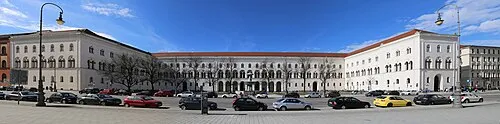
Ludwig-Maximilians-Universität München
53,609 students
 Public
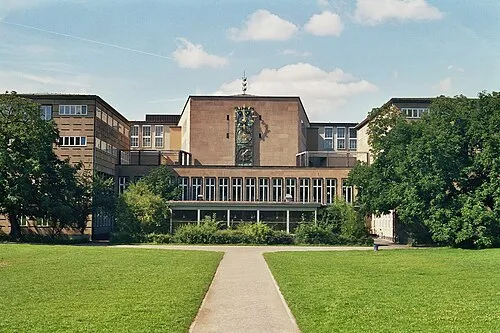
Universität zu Köln
47,238 students
 HAW
FOM Hochschule für Oekonomie & Management - University of Applied Sciences
45,369 students
Student Reviews
Verified reviews from current students, alumni and applicants.
No reviews yet. Be the first!
Verified students and alumni can share their experience below.
Write a review about Martin-Luther-Universität Halle-Wittenberg Open form ↓
How do I apply to Martin-Luther-Universität Halle-Wittenberg as an international student?
Non-EU applicants apply via uni-assist (document verification + APS certificate for some countries). EU applicants apply directly. You need a recognised degree, language certificate, motivation letter and CV. After admission, open a Sperrkonto and book a visa appointment at your local German embassy.
- Pick a programme — Browse the programme list above — filter by language, degree, field.
- Verify your eligibility — Check Anabin/APS for your country and degree-equivalence rules.
- Get language certificate — TestDaF/DSH for German, IELTS/TOEFL for English-taught programmes.
- Apply via uni-assist or directly — Submit by 15 July (winter) / 15 January (summer) deadlines.
- After admission: Sperrkonto + visa — Open the blocked account, get health insurance, attend embassy interview.