Law & Economics
Law & Economics
Germany is a leading country offering a globally respected education in Law and Economics. This interdisciplinary field, increasingly popular among Turkish students, provides unique opportunities for those who want to deepen their legal knowledge and understand economic processes. Universities in Germany stand out with their modern educational approaches, strong research infrastructures, and international career pathways. Law and Economics education is ideal for those specializing in areas like European Union law, international trade law, business law, and financial markets. Pursuing a master's degree in law or economics in Germany gives graduates a competitive edge in the global job market and develops their analytical thinking, problem-solving, and critical evaluation skills. This page serves as a comprehensive guide for Turkish students considering to study Law and Economics in Germany.
Quick Look
- Field Name (DE)
- Rechts-, Wirtschaftswissenschaften
- Field Name (EN)
- Law & Economics
- Total Programs
- 2615
- English Programs
- 1655
- Bachelor Programs
- 987
- Master Programs
- 1226
- Featured Universities
- Technische Universität München, Ludwig-Maximilians-Universität München, Universität zu Köln, RWTH Aachen University, Universität Münster
Why Study Law & Economics in Germany?
Germany, with its deep-rooted educational tradition and innovative approaches, is an internationally recognized hub for Law and Economics. Studying in this field equips you with the ability to understand legal frameworks and analyze economic dynamics. Especially in our globalized world, there's a growing need for professionals specialized at the intersection of these two disciplines. Universities in Germany offer an educational model that combines theoretical knowledge with practical applications, supported by case studies and simulations. High-quality academic staff, modern research facilities, and diverse international student communities contribute to your academic and personal development. Furthermore, Germany's strong economy and central location in Europe offer graduates broad career opportunities in international companies, financial institutions, law firms, or the public sector. The abundance of English-taught programs (1655 programs) also opens doors for students who don't speak German, making Germany an attractive destination for you.
Programs and Specializations in Law & Economics
The programs offered in Law and Economics in Germany are quite diverse, providing you with various specialization paths. At the Bachelor's level, you'll generally learn fundamental legal and economic principles, while Master's programs offer more specific and in-depth specialization opportunities. For example, you can specialize in areas like Business Law, International Economic Law, Finance and Law, Tax Law, or European Law. Many programs aim to help students develop an interdisciplinary perspective by taking courses in both law and economics. Some programs might offer different modules based on your previous academic background (e.g., 'non-business background' programs for those coming from a field other than business or law). Example programs include 'Betriebswirtschaftslehre/Business Studies' as well as skill-focused courses like Academic Presentation and Communication or Academic Reading and Writing. These programs not only equip you with theoretical knowledge but also provide the practical competencies necessary to succeed in the business world and academia.
Application Process and Recognition Issues for Turkish Students
For Turkish students looking to study Law and Economics in Germany, the application process can involve some specific situations, especially concerning the recognition (Anerkennung) of your degree. It's generally not possible for Turkish law graduates to directly practice law in Germany or integrate into the German legal system, as the German legal system (which requires a Staatsexamen, a state examination) is quite different from the Turkish one. In such cases, Turkish law graduates often pursue Master's (LL.M.) programs in areas like international law, European law, or business law. However, for admission to a Master's program, the recognition of your Turkish Bachelor's degree in Germany is crucial. The Anabin database is typically used for this recognition process. If your diploma doesn't appear as 'H-' (Hochschulzugangsberechtigung, meaning university entrance qualification) in Anabin, or if there are restrictions for a specific field, this could affect your Master's applications. For students who graduated with an Economics degree and want to study in a different field in Germany, such as Industrial Engineering, you might need to attend a Studienkolleg (preparatory college) or a similar bridging program. This is especially true when there's a significant difference between your Bachelor's field of study and the program you wish to apply for. Institutions like uni-assist can provide guidance on which programs you can apply to by pre-evaluating your applications. The recognition of open education diplomas should also be checked via Anabin; in some cases, their validity might be limited for certain professions.
Monthly Cost of Living (Estimated)
Academic and Student Hubs
Germany's national library, located in Frankfurt and Leipzig, offers a wide range of academic resources.
Located in Karlsruhe, this institution is at the heart of the German legal system and can be fascinating for law students.
Frankfurt, one of Europe's leading financial centers, offers internship and career opportunities for economics students.
The library of one of Berlin's oldest universities, with its rich collection, is ideal for research.
One of Germany's largest and most established law faculties, it hosts academic events and seminars.
Student Life and Culture
Students studying Law and Economics in Germany become part of a dynamic and international student environment. German universities are known for their academic rigor and expect you to have independent study habits, critical thinking, and strong time management skills. Classes are often interactive, with seminars and discussion groups being an important part of the learning process. You can expand your social circle by joining university clubs or taking an active role in student associations (Fachschaften, student councils). Especially through Erasmus and other exchange programs, you'll have the opportunity to meet students from different cultures. Biking is a popular mode of transport in many German cities and an integral part of student life. Most universities offer students a Semesterticket (semester public transport pass), allowing you to use urban and sometimes regional public transport for free or at a reduced rate. This eases your budget and enables you to explore Germany.
- Interdisciplinary Approach
- International Student Environment
- Easy Transportation with Semesterticket
- Intensive Academic Work and Research
- Various Student Clubs and Activities
Frequently Asked Questions
If a law graduate's diploma isn't recognized in Anabin, are they not eligible for a Master's in Germany? What needs to be done to get recognition? ▼
If your diploma doesn't appear as 'H-' (Hochschulzugangsberechtigung, university entrance qualification) in the Anabin database or receives limited recognition, it can make applying to some Master's programs difficult. Especially in law, direct integration into the German legal system is challenging. You should regularly check Anabin for recognition, contact the international offices of universities, and if necessary, use the 'Zeugnisbewertung' (diploma evaluation) service. In some cases, non-law fields or specific Master's programs like international law might be more accessible.
I was accepted into an Economics program in Turkey, and I want to study Industrial Engineering in Germany. Do I need to attend a Studienkolleg or another program? ▼
Yes, if you have an Economics Bachelor's degree from Turkey and want to pursue a Bachelor's in a different field like Industrial Engineering in Germany, you'll generally need to attend a Studienkolleg (preparatory college). This is especially true if your Bachelor's degree is not considered directly suitable for the engineering field you're applying for. You should carefully review the admission requirements of technical universities like Aachen and uni-assist's evaluation.
I have a law degree (and a Diploma Supplement). Can I work in non-legal fields in Germany? What kind of jobs can I do? ▼
Yes, you can work in non-legal fields in Germany with your law degree. Practicing law in the German legal system requires German legal education and state examinations (Staatsexamen). However, your legal education provides you with valuable skills like analytical thinking, problem-solving, and contract knowledge. With these skills, you can work in consulting firms, compliance or human resources departments of international companies, project management, or non-governmental organizations. A Diploma Supplement increases the international recognition of your diploma but does not provide direct professional recognition.
I graduated from Open Education Public Administration Economics in Turkey. Can I work in the 'VERWALTUNG FACHEİNGSCHTELLE' profession with my diploma? Is my diploma valid? ▼
The validity of Open Education diplomas in Germany and their sufficiency for a specific profession must be checked via the Anabin database. For a specific profession like 'VERWALTUNG FACHEİNGSCHTELLE' (administrative specialist), in addition to the recognition of your diploma in Germany, you might also need to meet relevant professional qualifications. Positions in the public sector often require specific degrees from German universities or additional examinations. It's crucial to obtain the most accurate information from the relevant German institutions or via Anabin.
Uni-Assist only approved me for economics and related fields. Can I get admission for Industrial Engineering? ▼
Uni-Assist's evaluation indicates which fields of university education your Turkish Bachelor's degree is sufficient for in Germany. If you were only approved for economics and related fields, it means that direct admission to a different engineering field like Industrial Engineering might be difficult. In this case, you should either consider a Master's program related to economics or research whether you need to attend a preparatory program like Studienkolleg for Industrial Engineering. It would also be beneficial to contact the universities' own admission offices.
Are there qualified lawyers in Germany for labor and tenancy law? Can they write (legal documents)? ▼
Yes, there are many qualified lawyers (Rechtsanwalt) in Germany specializing in labor law (Arbeitsrecht) and tenancy law (Mietrecht). There are also Turkish-speaking lawyers available who can assist Turkish students or Turkish citizens living in Germany with legal matters. For your lawyer search in Germany, you can use the websites of local bar associations (Rechtsanwaltskammer) or online lawyer-finding platforms (e.g., Anwalt.de). Additionally, in some cities, you might find information through Turkish-German legal associations or consulates.
Ready to take the first step towards realizing your dreams in Law and Economics in Germany? Visit the AlmanyaUni platform to explore university programs and get support for your application process!
Programs in Law & Economics
Top universities in Law & Economics
All universities → 54 programs
Hochschule für Wirtschaft und Recht Berlin (HWR Berlin (Berlin School of Economics and Law))
SRH University (SRH University Heidelberg)
Munich Business School
 35 programs
Hochschule Osnabrück (Osnabrück University of Applied Sciences)
Europäische Fachhochschule (European University of Applied Sciences)
 31 programs
Rheinland-Pfälzische Technische Universität Kaiserslautern-Landau (RPTU University Kaiserslautern-Landau)
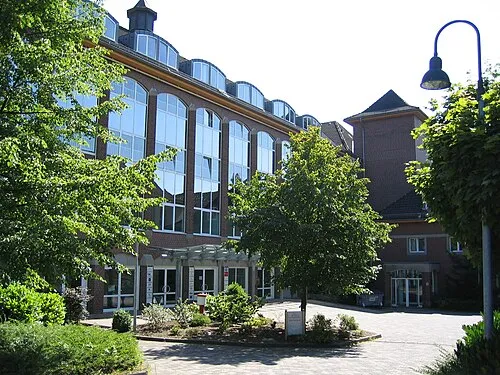 30 programs
University of Europe for Applied Sciences
Berlin School of Business & Innovation (BSBI School of Business and Innovation)
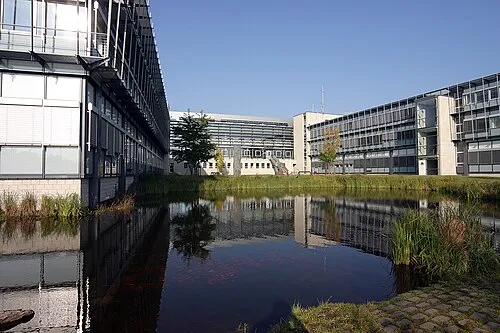 30 programs
Hochschule Koblenz (University of Applied Sciences Koblenz)
 29 programs
Hochschule für Wirtschaft und Gesellschaft Ludwigshafen (Ludwigshafen University of Business and Society)
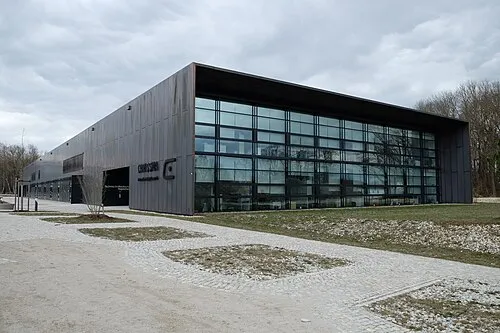 28 programs
Technische Hochschule Ingolstadt
 27 programs
Universität Hamburg
Best cities for Law & Economics
All cities →Cities offering the most programs in this field. Compare the Sperrkonto burden, cost of living and student life with the cost calculator.
Law & Economics by degree
Bachelor Programs (881)
All →Academic Presentation and Communication
@ Hochschule für Technik und Wirtschaft des Saarlandes
Academic Reading and Writing
@ Hochschule für Technik und Wirtschaft des Saarlandes
Accounting Techniques
@ Hochschule für Technik und Wirtschaft des Saarlandes
Agribusiness, BA
@ Hochschule Rhein-Waal
Air Traffic Management – dual Bachelor of Science
@ Hochschule Worms
Albrecht Mendelssohn Bartholdy Graduate School of Law
@ Universität Hamburg
AME - Automotive Management and Engineering
@ Hochschule für Wirtschaft und Umwelt Nürtingen-Geislingen
Angewandtes Management
@ Hochschule für Wirtschaft und Gesellschaft Ludwigshafen
Arts - Business Administration
@ Hochschule RheinMain
Arts - Cultural Studies und Management
@ Hochschule für Musik Saar
Arts Business Administration
@ Hochschule für angewandte Wissenschaften Kempten
Arts Future Tourism Innovation, Transformation and Sustainable Development
@ Hochschule für angewandte Wissenschaften Kempten
Professions in Law & Economics (849)
All →Abfüller/Abfüllerin
Agiler Coach / Scrum Master
Alleinsteuermann/Alleinsteuerfrau
Amtlicher Fachassistent (Fleischkontrolleur)/Amtliche Fachassistentin (Fleischkontrolleurin)
BerufstypAusbildungsberufAusbildungsartSchulische Ausbildung an unterschiedlichen Bildungseinrichtungen (durch eine europäische Verordnung g...
Amtsanwalt/Amtsanwältin
BerufstypBeamtenausbildunggehobener DienstAusbildungsartfachwissenschaftlicher Lehrgang an der Fachhochschule für Rechtspflege (Nordrhein-We...
Animateur/Animateurin - Freizeit
BerufstypAusbildungsberuf AusbildungsartSchulische Ausbildung an unterschiedlichen Bildungseinrichtungen (intern geregelt)Ausbildungsdauer U...
Anlageberater/Anlageberaterin
Anschläger/Anschlägerin
Application-Engineer/-Manager/in
Arbeitsmarktmanagement (grundständig)
StudientypGrundständiges StudiumStudienmöglichkeitenHochschule der Bundesagentur für Arbeit (Fachhochschule)AbschlussBachelor of Arts (B.A.)...
Arbeitsmarktmanager/Arbeitsmarktmanagerin
Arbeitsmarktorientierte Beratung (weiterführend)
Master Programs (1073)
All →- Betriebswirtschaftslehre/Business Studies
@ Martin-Luther-Universität Halle-Wittenberg
Accounting and Auditing
@ Ruhr-Universität Bochum
Accounting and Auditing
@ Hochschule des Bundes für öffentliche Verwaltung
Accounting and Controlling
@ Westfälische Hochschule Gelsenkirchen Bocholt Recklinghausen
Accounting and Finance
@ Arden University
Accounting and Finance
@ Johannes Gutenberg-Universität Mainz
Accounting and Finance
@ Frankfurt University of Applied Sciences
Accounting and Finance Top-Up
@ Arden University
Accounting Studies
@ Munich Business School
Accounting, Auditing, Taxation
@ Universität Siegen
Accounting, Finance & Sustainability
@ Justus-Liebig-Universität Gießen
Advanced Green Engineering and Sustainable Management
@ Westsächsische Hochschule Zwickau