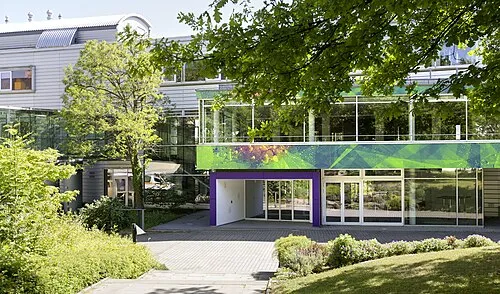
Max Planck Institute of Microstructure Physics
The Max Planck Institutes, the heart of scientific research in Germany, are globally recognized institutions that host groundbreaking work. One such institute, the Max Planck Institute of Microstructure Physics, offers unique opportunities for you if you're a Turkish student or researcher looking to delve into microstructure physics.
Located in Halle (Saale), one of Germany's historic and student-friendly cities, this institute provides modern laboratories and an international research environment for advanced scientific studies.
If you're looking to pursue a PhD in Germany or a post-master's research career, the Max Planck Institute of Microstructure Physics might be the right place for you. Unlike a traditional university, this institute is a highly research-focused center, primarily opening its doors to researchers through its PhD programs. On this page, you'll find everything you need to know, from the institute's application processes and visa procedures to the cost of living in Halle (Saale) and frequently asked questions. We know that topics like 'becoming a professor in Germany' or pursuing a 'research career' are of great interest among Turkish students, so we'll detail the opportunities the institute offers.
Quick Facts: Max Planck Institute of Microstructure Physics
- Institute Name
- Max Planck Institute of Microstructure Physics
- City
- Halle (Saale)
- State
- Sachsen-Anhalt
- Institute Type
- State Research Institute
- Programs Offered
- Doctoral (PhD) and Research Projects
- HRK Member
- Hayır
- Uni-Assist Member
- Hayır
Max Planck Institutes and Their Research-Focused Approach
The Max Planck Society (Max-Planck-Gesellschaft) is one of Germany's most prestigious scientific research organizations and encompasses numerous institutes specializing in various fields. The Max Planck Institute of Microstructure Physics is an important part of this network. Unlike traditional universities, Max Planck Institutes do not directly offer Bachelor's or Master's programs. Their primary focus is on making groundbreaking scientific discoveries and providing a world-class research environment for PhD students and postdoctoral researchers (postdocs).
At this institute, advanced research is conducted in the field of microstructure physics, which involves studying the atomic and molecular structures and properties of materials. For Turkish students, this is a significant opportunity, especially if you've graduated in physics, materials science, chemical engineering, or related engineering fields and aim for an academic career. PhD programs at the institute are typically structured around a specific research project, and students work in close collaboration with professors and researchers specialized in their fields. This intensive research environment offers students not only academic knowledge but also the chance to build an international network and publish scientific papers. Topics frequently discussed in our forums, such as 'Wie viel ist ein Professor wert?' (How much is a professor worth?), highlight the high contribution and value of academics working in such high-profile research institutes to the scientific world.
Halle (Saale): A Historic and Student-Friendly City
Halle (Saale), home to the Max Planck Institute of Microstructure Physics, is a city in Germany's Sachsen-Anhalt state with a rich history and a vibrant student population. Situated on the Saale River, Halle stands out with its Baroque architecture, green spaces, and cultural events. The city also hosts a major university, Martin-Luther-Universität Halle-Wittenberg, contributing to its young and dynamic atmosphere. This provides a socially and culturally rich environment for researchers pursuing their PhDs at the Max Planck Institute.
Halle (Saale) can also be a preferred choice for Turkish students due to its more affordable cost of living compared to other major German cities. The historic Marktplatz in the city center is bustling with various cafes, restaurants, and shops. Cultural venues like the Moritzburg Art Museum and Händel House also reflect the city's richness. The transportation network is well-developed, and cycling is a popular way to get around the city. Even with an intensive research pace at the institute, Halle (Saale) offers many opportunities for students and researchers to relax and socialize.
Halle (Saale) Monthly Cost of Living (Estimated)
Places to Explore in and Around Halle (Saale)
The city's heart, a vibrant square surrounded by historic buildings, a market, and the famous Händel Monument.
An important museum housed in a medieval castle, home to modern and contemporary art.
Halle's major university, an academic hub with its campus and libraries.
Green spaces and recreational areas ideal for relaxing, walking, or cycling.
A historic and picturesque castle ruin rising above the Saale River.
The birthplace of the famous composer Georg Friedrich Händel, now converted into a museum.
Student Life and Research Culture at the Max Planck Institute
Student life at the Max Planck Institute of Microstructure Physics differs somewhat from the social life of a traditional university student. Here, the focus is on intensive scientific research and academic development. PhD students and researchers work in an international environment alongside colleagues from various countries. The institute organizes regular seminars, workshops, and conferences, encouraging students to stay updated on the latest scientific developments and present their own research.
Various social events and clubs may be available within the institute or in collaboration with Martin-Luther-Universität in Halle (Saale). This offers researchers opportunities to expand both their academic and social networks. Furthermore, the high interest in topics like 'Office365 for Students - Germany -' or 'Free and Licensed Alternative to Microsoft Office: OpenOffice' in our forums shows how much students value the software and resources they use in their academic work. At the Max Planck Institute, you can also find support regarding access to such software or its alternatives.
Keep in mind: Max Planck Institutes typically provide scholarships or salaries to PhD students, so you might be in a more comfortable position regarding cost of living compared to traditional university students. This allows researchers to focus solely on their academic work.
- International and multicultural research environment
- Intensive scientific research and publication focus
- Opportunity to work closely with expert professors in the field
- Academic development through regular seminars and conferences
- Opportunity to build a strong scientific network
Frequently Asked Questions (from Turkish Students)
I have English translations of my diploma and transcript. Is it mandatory for them to be in German and apostilled? Will they accept English? ▼
Max Planck Institutes generally operate in an international environment, so they may accept English documents. However, each institute or program might have its own specific requirements. While official English translations are often sufficient, in some cases, notarized or apostilled translations might be requested. For definitive information, it is essential that you check the application requirements for the specific program on the official website of the institute you are applying to.
I applied for a 41f visa, and it's been over a month with no response. Is it normal for it to take this long? ▼
German visa processes can take longer, especially during peak seasons or when additional documents are requested. Similar situations can occur with 41f visa (researcher visa) applications. The estimated times provided by iData office staff are general information and can vary depending on the workload of the consulate or the foreigners' office (Ausländerbehörde). Unfortunately, this duration is not abnormal. You can contact iData or the consulate to follow up on developments.
If the interview takes place at an iData office instead of the consulate, do they take your phone? ▼
iData offices are outsourced organizations that provide visa application acceptance and preliminary interview services for consulates. Security procedures may be similar to those at consulates. Generally, you'll be asked to leave your cell phone and other electronic devices in safekeeping when entering. This is for both security and to prevent distractions during the interview. It's best to check the security rules on iData's official website before you go to the office.
I want to go with my family, so I'll be applying for a spouse and child visa. How did those who arranged a rental agreement beforehand manage it, and what would the cost be? ▼
Finding a rental agreement to live with your family in Germany, especially remotely, can be challenging. It's generally more common to arrange temporary accommodation first (Airbnb, short-term rentals) and then search for a home once you've arrived in Germany. Rental costs vary depending on the city's size and the apartment's size. In cities like Halle (Saale), the basic rent (Kaltmiete) for a 2-bedroom apartment might be around 600-900 Euros, with additional costs (Nebenkosten) bringing the total to 800-1200 Euros. The security deposit (Kaution) is typically 2-3 months' worth of Kaltmiete. Real estate websites (ImmobilienScout24, WG-Gesucht) or local real estate agents can help you find a home.
Insurances like Dr. Walter, Expatio charge excessive fees; can we get it cheaper with Allianz insurance? Are there friends who got it with Allianz? ▼
Health insurance is mandatory in Germany and varies depending on your student or researcher status. Providers like Dr. Walter or Expatio typically offer comprehensive packages specifically for international students and researchers, which often simplify bureaucratic processes. Major insurance companies like Allianz may also have student tariffs or special packages for researchers. However, it's crucial to compare policies in detail regarding coverage, service quality, and potential additional fees. In some cases, a seemingly cheaper policy might not cover certain services. You can follow AlmanyaUni forums or Telegram groups to learn about the experiences of other Turkish students.
Can I still use a Uni-Assist profile opened 2 years ago, is it current, or do I need to open a new one? ▼
If your Uni-Assist profile was opened 2 years ago, it's generally still valid, and you can use it. Uni-Assist profiles are personal and can be used for a long time once created. However, if there have been any changes to your personal information (address, contact details, etc.) or educational background, you should remember to update your profile. When making a new application, you might need to re-upload or update documents from your old profile. Since the Max Planck Institute is not a Uni-Assist member, this question doesn't directly apply to applying to the institute, but this information is important for other universities in Germany.
Do you need more information about research or pursuing a PhD at the Max Planck Institute of Microstructure Physics? Do you have questions about application processes, visa procedures, or life in Halle (Saale)? Join our AlmanyaUni forums, connect with experienced Turkish students, and get one step closer to your dream research career!
Max Planck Institute of Microstructure Physics — Images
Programs
Location
Sources
Programs & Departments
2 active programs · 2 English · 0 NC-frei
Showing 1–2 of 2 programs
Bachelor
PhD
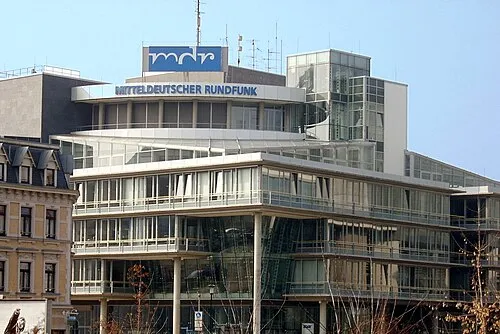
Halle (Saale)
State: Saxony-Anhalt
Education and Universities in Halle (Saale)
Halle (Saale) is a significant educational hub in Germany, boasting a deep-rooted academic history. The city's most well-known and largest public univ...
more →Halle (Saale)'s Historical and Cultural Riches
With over a thousand years of history, Halle (Saale) offers visitors a unique cultural experience. The city's name comes from its connection to salt p...
more →Student Life and Culture
Halle (Saale) boasts a vibrant student culture thanks to its young and dynamic population. University-organized events, student clubs, and affordable...
more →More about Halle (Saale)
Cost of living, housing, transport, student life and all universities.
Student Experiences
Share yours too →No experience shared yet.
Be the first to share an experience about Max Planck Institute of Microstructure Physics and help other students.
Share your experienceOther universities in Halle (Saale)
All → Religious
Burg Giebichenstein Kunsthochschule Halle
1,249 students
 Public
Fernuniversität in Hagen
63,410 students
 Public
Technische Universität München
55,562 students
 Public
Ludwig-Maximilians-Universität München
53,609 students
 Public
Universität zu Köln
47,238 students
 Public
RWTH Aachen University
45,113 students
Student Reviews
Verified reviews from current students, alumni and applicants.
No reviews yet. Be the first!
Verified students and alumni can share their experience below.
Write a review about Max Planck Institute of Microstructure Physics Open form ↓
How do I apply to Max Planck Institute of Microstructure Physics as an international student?
Non-EU applicants apply via uni-assist (document verification + APS certificate for some countries). EU applicants apply directly. You need a recognised degree, language certificate, motivation letter and CV. After admission, open a Sperrkonto and book a visa appointment at your local German embassy.
- Pick a programme — Browse the programme list above — filter by language, degree, field.
- Verify your eligibility — Check Anabin/APS for your country and degree-equivalence rules.
- Get language certificate — TestDaF/DSH for German, IELTS/TOEFL for English-taught programmes.
- Apply via uni-assist or directly — Submit by 15 July (winter) / 15 January (summer) deadlines.
- After admission: Sperrkonto + visa — Open the blocked account, get health insurance, attend embassy interview.