Max Planck Institute for Sustainable Materials
For Turkish students eager to conduct groundbreaking research in sustainable materials in Germany, the Max Planck Institute for Sustainable Materials in Düsseldorf could be a significant destination. This institute, focusing primarily on doctoral (PhD) programs, hosts innovative scientific work. Located in the heart of the North Rhine-Westphalia (Nordrhein-Westfalen) state, in the dynamic city of Düsseldorf, this public institution is an internationally recognized research center.
Unlike traditional university structures, Max Planck Institutes concentrate more on in-depth research and specialized scientific projects. This page aims to guide you through your academic journey in Germany by covering the opportunities offered by the institute, life in Düsseldorf, and frequently asked questions from Turkish students. Especially for those considering doctoral-level education, the Max Planck Institute for Sustainable Materials offers a unique platform to contribute to materials science for a sustainable future.
Quick Facts
- Institute Name
- Max Planck Institute for Sustainable Materials
- City
- Düsseldorf
- State
- Nordrhein-Westfalen
- Type
- Public
- Programs Offered
- Doctoral (PhD)
- HRK Membership
- No
- Uni-Assist Membership
- No
Max Planck Institute for Sustainable Materials: At the Heart of Research and Innovation
As its name suggests, the Max Planck Institute for Sustainable Materials is an organization dedicated to advanced scientific research, focusing on sustainable materials. Rather than a traditional university, this is a research institute, and its primary goal is to push the boundaries of materials science to develop sustainable solutions for the future. The institute opens its doors especially to doctoral (PhD) level researchers, offering the chance to participate in innovative projects within an international environment.
Düsseldorf's strategic location and the strong academic infrastructure of the Nordrhein-Westfalen state significantly contribute to the institute's research. For Turkish students, this means not just studying in Germany, but also having the opportunity to be directly involved in scientific work that will have a global impact. As a public institution, the institute prioritizes scientific independence and excellence. If you're aiming for an in-depth research career in materials science, the Max Planck Institute for Sustainable Materials can offer you an inspiring environment.
Düsseldorf: Life and Career Opportunities
For students considering doctoral studies at the Max Planck Institute for Sustainable Materials, Düsseldorf is not just a city, but a vibrant center for life. As the capital of North Rhine-Westphalia, Düsseldorf stands out with its modern infrastructure, cultural richness, and dynamic business world. The city is one of Europe's important centers, especially in fashion, art, and trade.
While the cost of living for students might be more affordable compared to other major German cities, it promises a student life full of social and cultural activities. For those searching for language courses, a common question in our Telegram groups, Düsseldorf offers many language schools and course options. For example, institutions like Go Akademi serve students wishing to take language courses in the city.
The city's transportation network is highly developed, and with a Semesterticket (semester public transport ticket), you can easily reach many places within the city and its surroundings. Furthermore, the international student community in the city is quite large, which eases the adaptation process. Researchers at the Max Planck Institute can also benefit from this dynamic environment, continuing both their academic and personal development.
Max Planck Institutes Application Process and Key Considerations
Max Planck Institutes have an application process that differs from traditional universities. Typically, you apply directly for a specific doctoral project or research group. This institute is not a member of Uni-Assist, so your application documents are evaluated directly by the institute.
Topics like 'Uni-Assist grade conversion,' which we frequently encounter in our forums and Telegram groups, may not apply to this institute. However, it's still important that your transcripts and diplomas are translated into German or English and notarized. During the application process, language proficiency (usually English, as most research is conducted in English) and your previous academic achievements are of great importance.
For doctoral programs, a high Master's degree GPA is generally expected. For Turkish students, issues like the visa process, a blocked account (Sperrkonto), and health insurance (AT11 or private insurance) also become important in the post-application stages. Accessing accurate information and preparing all necessary documents completely during these processes is critically important for a smooth start to your academic journey in Germany. The best approach is to follow the current application requirements and open positions on the institute's official website.
Estimated Monthly Cost of Living
Places to Visit and Student Hangouts in Düsseldorf
A popular promenade along the Rhine River, ideal for walking and relaxation.
Düsseldorf's lively center, known as 'the longest bar in the world,' home to many pubs and restaurants.
A renovated harbor district featuring modern architecture and home to creative industries.
A large and peaceful park in the city center, ideal for relaxation and sports.
An important art collection showcasing modern and contemporary artworks.
A lively marketplace where you can find local products, fresh food, and international delicacies.
Student Life and Culture
Düsseldorf hosts an international student community, including doctoral students at research institutes like the Max Planck Institute for Sustainable Materials. Student life in the city is quite dynamic and diverse. Students benefit not only from the academic opportunities offered by universities and institutes but also from the city's rich cultural calendar and social events.
Especially the bars and cafes in the Altstadt (Old Town) are popular spots for students to socialize. Düsseldorf is a bicycle-friendly city, and many students prefer cycling for transportation within campuses and the city. Thanks to the Semesterticket (semester student public transport ticket) in the North Rhine-Westphalia state, students can use public transport throughout the state for free or at very affordable rates.
This provides a great advantage for exploring other cities or visiting friends. Since the institute itself has a community of international researchers, students studying here have the opportunity to meet people from different cultures and build a global network.
- Strong and widespread cycling culture
- Free/discounted public transport in NRW state with Semesterticket
- International and multicultural student environment
- Rich cultural events and festivals
- Numerous cafe, bar, and restaurant options
Frequently Asked Questions
I have a conditional admission from Bremen University in Germany, and I want to arrange a language course and accommodation in Düsseldorf. Is there anyone who can help? ▼
If you have conditional admission from Bremen University and are looking for a language course in Düsseldorf, institutions like Go Akademi offer language education there. For accommodation, you'll need to research online platforms (e.g., WG-Gesucht.de) for student dormitories (Studierendenwerk), WG (Wohngemeinschaft - shared flat) rooms, or private rental apartments. If you're having trouble communicating, you can seek support through student communities or counseling services in Germany. Remember, the Max Planck Institute for Sustainable Materials does not directly provide language courses or accommodation, but you can utilize the city's resources.
Do you know any universities that offer conditional admission for Computer Science (Informatik) programs with B1-B2 German language proficiency? ▼
The Max Planck Institute for Sustainable Materials does not directly offer Computer Science (Informatik) programs and generally expects advanced language proficiency (mostly English) for doctoral programs. However, there are some universities across Germany that offer conditional admission with B1-B2 German language proficiency. These universities are often technical universities or universities of applied sciences. You can broaden your search using keywords like 'Informatik support programs' or 'universities offering conditional admission.' The best approach is to get information directly from their official websites or via Uni-Assist.
They're asking for my health insurance company for my residence permit application. I came with an AT11 document and haven't gotten insurance here. Will it be an issue if I write AT11? ▼
The AT11 document, under the social security agreement between Turkey and Germany, ensures that your insurance in Turkey covers certain services in Germany. However, if you plan to study in Germany long-term, it's generally mandatory to be included in the German health insurance system (public or private). While you can mention your AT11 document in your residence permit application, German authorities might still request additional German insurance. It's crucial to clarify this issue with the foreigners' office (Ausländerbehörde) or student advisory services in Germany.
What did I write as my departure date on the visa form? Can they issue my departure date based on my insurance start date? ▼
On the visa application form, you should write the date you plan to first enter Germany as your departure date. The start date of your travel health insurance is usually set to cover a few days before this departure date. Visa officers want to ensure your insurance covers your entire stay in Germany, or at least the first few months. Therefore, make sure the start and end dates of your insurance policy align with your travel plans.
Which platform is generally used for transferring money for a blocked account (Sperrkonto)? ▼
Money transfers for a blocked account (Sperrkonto) are usually made through specialized providers like 'Coracle' or 'Fintiba.' These platforms are designed to simplify the process of opening a blocked account and transferring money in Germany. While bank transfers are also possible, these platforms generally offer faster and more practical solutions. You should carefully follow the instructions of your chosen blocked account provider.
Uni-Assist calculated my GPA differently; what could be the reason? ▼
Uni-Assist uses its own conversion formula (the Bavarian Formula) according to the German grading system. This formula can differ from the grading system in Turkey and may sometimes yield different results than students calculate themselves. Additionally, whether certain courses or credits are included in the evaluation can also make a difference. If you believe there's a significant discrepancy, you can contact Uni-Assist to request detailed information. Since Max Planck Institutes do not use Uni-Assist, this situation may not directly apply when applying to this institute, but it's useful as general information.
Don't hesitate to contact us for more information about the Max Planck Institute for Sustainable Materials or for any questions regarding your study journey in Germany. Our expert team is ready to support you!
Max Planck Institute for Sustainable Materials — Images
Programs
Location
Sources
Programs & Departments
2 active programs · 2 English · 0 NC-frei
Bachelor (1)
PhD (1)
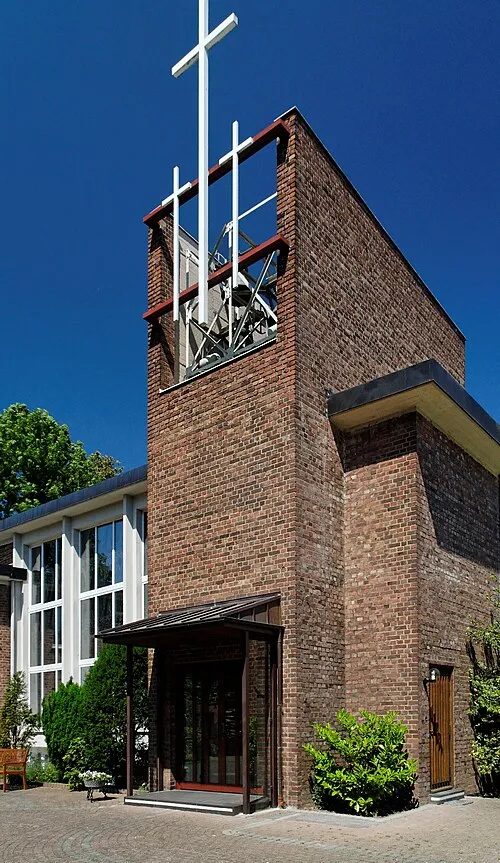
Düsseldorf
State: North Rhine-Westphalia
Education in Düsseldorf: Academic Opportunities
Düsseldorf offers a wide range of academic options for Turkish students looking to study in Germany. The city's 8 public universities provide students...
more →Student Life and Culture
Düsseldorf doesn't just focus on academic success; it also offers a rich student life and cultural experience. Thanks to its international student com...
more →Recognition and Application Processes: A Guide for Turkish Students
For Turkish students looking to study in Germany, one of the most frequently asked questions is about the recognition (denklik) processes. Specificall...
more →More about Düsseldorf
Cost of living, housing, transport, student life and all universities.
Student Experiences
Share yours too →No experience shared yet.
Be the first to share an experience about Max Planck Institute for Sustainable Materials and help other students.
Share your experienceOther universities in Düsseldorf
All → Public
Heinrich-Heine-Universität Düsseldorf
28,641 students

IST-Hochschule für Management
4,797 students
 Public
Hochschule Düsseldorf
2,080 students
 Public
Robert-Schumann-Hochschule Düsseldorf
812 students
 Public
Kunstakademie Düsseldorf
547 students
 Public
Europäische Medien- und Business-Akademie
Student Reviews
Verified reviews from current students, alumni and applicants.
No reviews yet. Be the first!
Verified students and alumni can share their experience below.
Write a review about Max Planck Institute for Sustainable Materials Open form ↓
How do I apply to Max Planck Institute for Sustainable Materials as an international student?
Non-EU applicants apply via uni-assist (document verification + APS certificate for some countries). EU applicants apply directly. You need a recognised degree, language certificate, motivation letter and CV. After admission, open a Sperrkonto and book a visa appointment at your local German embassy.
- Pick a programme — Browse the programme list above — filter by language, degree, field.
- Verify your eligibility — Check Anabin/APS for your country and degree-equivalence rules.
- Get language certificate — TestDaF/DSH for German, IELTS/TOEFL for English-taught programmes.
- Apply via uni-assist or directly — Submit by 15 July (winter) / 15 January (summer) deadlines.
- After admission: Sperrkonto + visa — Open the blocked account, get health insurance, attend embassy interview.