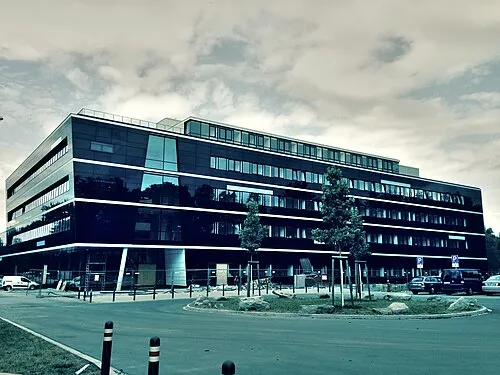
Max Planck Institute for the Science of Light
The Max Planck Institutes, the heart of scientific excellence in Germany, are renowned worldwide for their groundbreaking research. Specifically, the Max Planck Institute for the Science of Light hosts pioneering work that shapes future technologies in the fields of light science and quantum optics. Rather than a traditional university structure, this institute focuses on advanced research and PhD programs, offering unique opportunities for Turkish students passionate about science.
Located in the city of Erlangen, this prestigious institution provides an ideal environment for candidates aiming for an academic career after their master's degree and wishing to engage in in-depth scientific research. While questions about language proficiency (Goethe, Telc certificates) and visa processes (40f, 36f) are common among Turkish students who want to study in Germany, application procedures and expectations can differ at specialized institutions like the Max Planck Institute for the Science of Light. This page aims to guide you on your scientific journey in Germany by detailing the opportunities the institute offers, application tips, and life in Erlangen.
Quick Facts
- Institution Name
- Max Planck Institute for the Science of Light
- City
- Erlangen
- State
- Bavaria (Bayern)
- Institution Type
- Public Research Institute
- Founded Year
- 2009
- Number of Researchers and PhD Students
- Approximately 200 (Estimated, verify on official website)
- Programs Offered (DB Data)
- Bachelor's: 1, Master's: 1, PhD: 1 (The institute primarily focuses on PhD and advanced research.)
- HRK Member
- No
- Uni-Assist Member
- No
- Official Website
- mpsl.mpg.de
Max Planck Institute for the Science of Light: A Hub of Scientific Excellence
Operating under the Max Planck Society, the Max Planck Institute for the Science of Light (MPL) conducts world-leading research in light science, quantum optics, photonics, and related fields. The institute undertakes a wide range of work, from fundamental scientific discoveries to innovative technological applications. Researchers at MPL develop groundbreaking experiments and theoretical models to understand the fundamental properties of light and manipulate it in new ways.
The professors and researchers working at the institute are internationally renowned scientists in their fields. Questions frequently asked in our forums, such as 'Wie viel ist ein Professor wert?' (How much is a professor worth?), highlight the importance placed on the quality of academic staff in Germany. At MPL, you get the opportunity to work directly with such high-caliber academics and contribute to science under their guidance. The institute offers a unique environment for young researchers with its state-of-the-art laboratories and international collaborations. This environment allows PhD students, in particular, to build a global network and get involved in significant scientific projects early in their careers.
Education and Research Opportunities: PhD and Beyond
Rather than being a university that offers traditional bachelor's or master's programs, the Max Planck Institute for the Science of Light focuses on advanced scientific research, especially PhD programs. The institute typically awards PhD degrees in cooperation with local universities like Friedrich-Alexander-Universität Erlangen-Nürnberg (FAU). This means students can benefit from both the Max Planck Institute's research environment and the university's academic structure.
Many questions arise among Turkish students regarding language proficiency for master's and PhD applications. Questions we frequently encounter in our Telegram groups, such as 'Will we get conditional admission for a master's with a B2 Goethe or Telc certificate, or will they accept us directly?' or 'Which language certificate should I get for a master's application? Is there a difference between Goethe, Telc, or ÖSD for the consulate?', show how important this topic is. At research-focused institutions like MPL, English-taught programs are usually offered, and internationally recognized English language certificates like TOEFL or IELTS are required. For PhD programs, B2 or C1 level English proficiency is generally expected. Conditional admission based on German language proficiency is not typically applicable for most Max Planck Institutes, as the language of instruction and research is predominantly English. However, knowing German is a significant advantage for daily life and administrative processes. The institute offers continuous learning and development opportunities for PhD students and post-doc researchers by organizing various seminars, workshops, and conferences.
Estimated Monthly Cost of Living - Erlangen
Places to Visit and Student Hangouts in Erlangen
This garden, belonging to FAU, offers a wonderful green space for relaxation between classes or on weekends.
Located in the city center, this historic garden is a popular spot for walks and socializing.
Erlangen's vibrant center hosts weekly markets and various events.
Erlangen's famous beer festival attracts thousands of visitors every year and is an important part of student life.
A modern library offering a wide range of resources for researchers and students.
An interesting museum focusing on the history of medical technologies, showcasing Siemens' long-standing presence in Erlangen.
Student and Researcher Life and Culture
Erlangen is not only a university city but also a scientific hub with research institutions like the Max Planck Institute. This enriches the student and researcher culture in the city. Thanks to the high student population, it's easy to find affordable cafes, bars, and cultural events. The close relationship with FAU, in particular, allows MPL researchers to benefit from university facilities and student communities.
Within the institute, there's a highly international environment thanks to researchers and PhD students from various countries. This offers an opportunity to get to know different cultures and build a global network. Scientific seminars, working groups, and social events are an important part of life at the institute. The city is also notable for its bike-friendly structure; many students and researchers prefer bicycles for transportation. Furthermore, thanks to its proximity to larger cities like Nuremberg, weekend trips and access to bigger cultural events are quite easy.
- International and multicultural research environment
- Strong academic connections with FAU Erlangen-Nürnberg
- Bike-friendly city and transportation options
- Scientific seminars and networking events
- Cultural diversity thanks to proximity to Nuremberg
Frequently Asked Questions
Can I pursue a bachelor's or master's degree at the Max Planck Institute for the Science of Light? ▼
The Max Planck Institute for the Science of Light is not a traditional university and does not directly offer bachelor's or master's programs. Its focus is on advanced research and PhD education. However, they may admit master's and PhD students, often in cooperation with local universities like Friedrich-Alexander-Universität Erlangen-Nürnberg (FAU). We recommend checking the 'Careers' or 'PhD Programs' sections on the institute's official website for details.
Which language certificates are valid for applying to the Max Planck Institute? ▼
The language of research and education at Max Planck Institutes is generally English. Therefore, when you apply, internationally recognized English language proficiency certificates like TOEFL or IELTS are required. Typically, B2 or C1 level English proficiency is expected. While German certificates (Goethe, Telc, ÖSD) can be useful for daily life and administrative processes, they are not the primary application requirement for most research programs.
Can I get conditional admission if I don't know German? ▼
Your chances of receiving conditional admission based on German language proficiency are low at research institutes like the Max Planck Institute for the Science of Light, as programs are generally conducted in English. If a joint program with a university is involved, the university's conditional admission policies might apply. However, for PhD programs directly within the institute, English proficiency is a direct requirement.
Should I apply for a 40f or 36f student visa in Germany? ▼
When applying for a student visa in Germany, the visa category can change depending on the type of program you've been accepted into. If you received conditional admission from a university (language course + university studies), you might generally need to apply for a 40f visa (visa for language course and university studies). If you received direct university admission or acceptance to a PhD program, a 36f visa (visa for university studies) might be more suitable. If you've been accepted for a PhD at a Max Planck Institute, this typically falls under the 36f category. It's crucial to get the most accurate information from the official website of the German Consulate or Embassy or from Visa Consulting Services.
I have a Goethe A2 certificate and an IELTS score for the Istanbul Consulate; do you think I'll be rejected, or should I aim for B1? ▼
The required language level for a visa application varies depending on the language of your chosen program and the consulate's current requirements. If you're applying for an English-taught program, your IELTS score might be sufficient. However, some consulates might also request basic German language knowledge (A1 or A2) because you'll be studying in a German-speaking country. While an A2 certificate is often considered sufficient, reaching a B1 level presents a stronger profile during the visa process and makes your daily life in Germany easier. It's always best to check the current requirements on the consulate's official website.
For more information about the Max Planck Institute for the Science of Light and detailed guidance on application processes, keep following the AlmanyaUni platform! We are ready to support you on your path to your dream scientific career.
Max Planck Institute for the Science of Light — Images
Programs
Sources
Programs & Departments
3 active programs · 3 English · 0 NC-frei
Bachelor (1)
Master (1)
PhD (1)
Student Experiences
Share yours too →No experience shared yet.
Be the first to share an experience about Max Planck Institute for the Science of Light and help other students.
Share your experienceSimilar universities
All → HAW
HAW
IU Internationale Hochschule
124,244 students
 Public
Fernuniversität in Hagen
63,410 students
 Public
Technische Universität München
55,562 students
 Public
Ludwig-Maximilians-Universität München
53,609 students
 Public
Universität zu Köln
47,238 students
 HAW
HAW
FOM Hochschule für Oekonomie & Management - University of Applied Sciences
45,369 students
Student Reviews
Verified reviews from current students, alumni and applicants.
No reviews yet. Be the first!
Verified students and alumni can share their experience below.
Write a review about Max Planck Institute for the Science of Light Open form ↓
How do I apply to Max Planck Institute for the Science of Light as an international student?
Non-EU applicants apply via uni-assist (document verification + APS certificate for some countries). EU applicants apply directly. You need a recognised degree, language certificate, motivation letter and CV. After admission, open a Sperrkonto and book a visa appointment at your local German embassy.
- Pick a programme — Browse the programme list above — filter by language, degree, field.
- Verify your eligibility — Check Anabin/APS for your country and degree-equivalence rules.
- Get language certificate — TestDaF/DSH for German, IELTS/TOEFL for English-taught programmes.
- Apply via uni-assist or directly — Submit by 15 July (winter) / 15 January (summer) deadlines.
- After admission: Sperrkonto + visa — Open the blocked account, get health insurance, attend embassy interview.