
Max Planck Institute for Molecular Genetics
At the heart of Germany's scientific and research world, the Max Planck Institute for Molecular Genetics is a prestigious Berlin-based research institute renowned for its groundbreaking work, especially in molecular genetics. For Turkish students seeking PhD and advanced research opportunities in Germany, this institute is a key hub, offering unparalleled chances to shape a scientific career. At AlmanyaUni, we've put together a comprehensive guide for anyone curious about this special institute and student life in Berlin.
We know Turkish students are particularly interested in topics like accommodation in Berlin and residence permit applications. On this page, you'll find a wealth of information, from the research opportunities at the Max Planck Institute for Molecular Genetics to Berlin's vibrant student life and frequently asked questions.
Quick Facts
- Institute Name
- Max Planck Institute for Molecular Genetics
- City
- Berlin
- State
- Berlin
- Type
- State Research Institute
- Focus Programs
- PhD Programs, Postdoctoral Research
- HRK Member
- Hayır
- Uni-Assist Member
- Hayır
A Closer Look at the Max Planck Institute for Molecular Genetics
The Max Planck Institute for Molecular Genetics (MPIMG) is an internationally renowned institution, part of the Max Planck Society, conducting fundamental research in molecular genetics. The institute has made groundbreaking discoveries in areas like understanding genetic diseases, gene regulation mechanisms, genomics, and bioinformatics. It houses numerous laboratories, modern research facilities, and high-tech equipment.
It offers advanced scientific training and career opportunities, especially for PhD students and postdoctoral researchers. The institute typically does not award university degrees (Bachelor's or Master's) directly; instead, it hosts PhD programs in collaboration with universities, providing young researchers with a world-class research environment. This structure allows students to combine theoretical knowledge with practical research experience, preparing them for the international scientific community.
Student Life in Berlin: Accommodation, Transportation, and Bureaucratic Processes
Germany's capital, Berlin, is a highly popular city among Turkish students, known for its dynamic and multicultural atmosphere. However, this popularity also brings some challenges, especially when it comes to accommodation. Topics like 'I'm looking for a WG/dorm in Berlin,' which we frequently see in our forums and Telegram groups, highlight just how competitive the city's housing market is. Students typically look for shared flats (Wohngemeinschaft - WG) or student dormitories (Studentenwohnheim). Studentenwerk Berlin is a crucial resource for dorm applications, but spots are limited. Private dorms can also be an option, but they come with higher costs.
Residence permit applications are another important topic to focus on in Berlin. The high view counts for topics like 'Berlin - Residence Application Guide' in our forums prove how critical this process is for students. It's crucial to get an appointment with the Foreigners' Office (Ausländerbehörde), prepare all necessary documents completely, and follow the process correctly. Students new to Germany need to quickly complete their Anmeldung (address registration) and other bureaucratic procedures. Regarding transportation, Berlin boasts an extensive public transport network. Students can usually travel affordably within and around the city with a Semesterticket (semester public transport ticket).
Monthly Cost of Living (Estimated)
Places to Visit and Student Hangouts
The institute campus, located in the Dahlem district, featuring modern research facilities and laboratories.
One of Germany's largest libraries, offering extensive study spaces for students.
Details ↗Berlin's enormous central park, ideal for relaxing, exercising, and socializing.
This UNESCO World Heritage site is home to many famous museums, a cultural treasure for students.
An open-air art gallery located on the longest remaining section of the Berlin Wall.
Districts known for their high student and young population, vibrant cafes, bars, and cultural venues.
Student Life and Culture
Student life at the Max Planck Institute for Molecular Genetics is intensely research-focused and international in nature. The institute brings together talented researchers from all over the world, offering a multilingual and multicultural environment. PhD students and postdocs work on their own research projects while constantly exchanging scientific knowledge through seminars, workshops, and conferences. This is a fantastic opportunity not only for academic development but also for building a strong professional network.
Social events and student initiatives within the institute strengthen the bonds among researchers. Berlin's extensive cultural and social opportunities also enrich student life. Concerts, art galleries, historical sites, and vibrant nightlife ensure students enjoy their time outside of studies. Biking culture is very strong in Berlin, and many students prefer bicycles for transportation. Thanks to student discounts (Studentenrabatt) in the city, you can access theaters, museums, and gyms at more affordable prices.
- International and multicultural research environment
- Intensive seminar and conference programs
- Opportunities to build a strong scientific network
- Berlin's rich cultural and social amenities
- Bike-friendly city structure
Frequently Asked Questions
Can I change cities while doing a language course in Germany? Will the Foreigners' Office cause problems? ▼
Doing a language course in a city different from where your course is registered can generally cause issues with the Foreigners' Office (Ausländerbehörde), as your residence permit is usually tied to your registered city. If you want to move to Berlin, it's crucial to first contact the Foreigners' Office in Berlin, inform them of your situation, and get their approval. Otherwise, you might face problems with the validity of your residence permit.
Are there universities that offer conditional admission for Computer Science programs with B1-B2 German? ▼
Yes, some universities in Germany can offer conditional admission (bedingte Zulassung) for certain programs with B1 or B2 level German. However, this varies by university and program. Generally, students who receive conditional admission are expected to reach C1 level and pass exams like DSH or TestDaF within a certain period after arriving in Germany. Since the Max Planck Institute does not offer direct Bachelor's education, this applies more to other universities. We recommend you carefully check the application requirements on the official websites of the universities you're interested in.
I'm looking for a house or dorm for a 1-year preparatory course in Berlin, how can I find one? ▼
Finding accommodation in Berlin can be a challenging process. You can apply to Studentenwerk Berlin for student dormitories (Studentenwohnheim), but waiting lists can be long. For shared flats (WG - Wohngemeinschaft), you can use platforms like WG-Gesucht.de and Immobilienscout24.de. Facebook groups (e.g., 'Wohnungssuche Berlin') can also be effective. Starting early and being patient is key.
Can I use the AT11 document as health insurance for a residence permit? ▼
The AT11 document allows you to benefit from certain health services under the social security agreement between Turkey and Germany. However, when applying for a residence permit as a student in Germany, you are usually required to have German public health insurance (gesetzliche Krankenversicherung) or private health insurance (private Krankenversicherung). The AT11 document might be a temporary solution, but it's generally not considered sufficient for long-term stays and residence permits. The Foreigners' Office may request valid insurance registration in Germany. It's best to discuss this situation with the Foreigners' Office and an insurance consultant.
Should we write the date we filled out the form or our visa interview date on the visa application form? ▼
The date on the visa application form usually refers to the date you filled out the form. However, some consulates or visa centers might also ask for the interview date. To get the most accurate information, it's important to check the current guidelines of the consulate or visa center you are applying to. Generally, the date the form was filled out is written, and the form's currency is confirmed during the visa interview.
Which platform can I use to transfer money for a blocked account (Sperrkonto)? ▼
Money transfers for a blocked account (Sperrkonto) are usually done through international money transfer platforms like Wise (formerly TransferWise), Remitly, or Xoom (a PayPal service). These platforms can offer lower commission rates and faster transfer times compared to traditional banks. Direct bank transfer is also an option. Using platforms recommended or partnered with your blocked account provider (e.g., Fintiba, Coracle) will simplify the process.
Why was my GPA different in the Uni-Assist grade conversion? ▼
Uni-Assist uses its own standard formula when converting GPAs to the German system. This formula might differ from the grading system in Turkey, which can result in a different GPA than what you calculated or what your university provided. Additionally, factors like course credits, passing grades, and your university's accreditation can also affect the conversion. If you believe there's a significant discrepancy, you can contact Uni-Assist directly to request detailed information and an explanation.
Don't forget to visit the official website to learn more about research and PhD programs at the Max Planck Institute for Molecular Genetics and to explore the application processes. At AlmanyaUni, we're ready to support you on your scientific career journey in Germany!
Max Planck Institute for Molecular Genetics — Images
Programs
Location
Sources
Programs & Departments
2 active programs · 2 English · 0 NC-frei
Showing 1–2 of 2 programs
Bachelor
PhD

Berlin
State: Berlin
Where can I study? Universities in Berlin
The distinction between a university (Universität) and a university of applied sciences (Hochschule) shapes your programme choice: universities are re...
more →Where can I live? Student housing in Berlin
Berlin has five kinds of student housing, each with its own application route and limits. 1. Studierendenwerk Berlin dorm. Applications go exclusively...
more →Monthly budget: student expenses in Berlin
The cards below show regular monthly costs. The rent line is the private-market median for a shared-flat room; with a dorm room, rent drops to the €26...
more →More about Berlin
Cost of living, housing, transport, student life and all universities.
Student Experiences
Share yours too →No experience shared yet.
Be the first to share an experience about Max Planck Institute for Molecular Genetics and help other students.
Share your experienceOther universities in Berlin
All →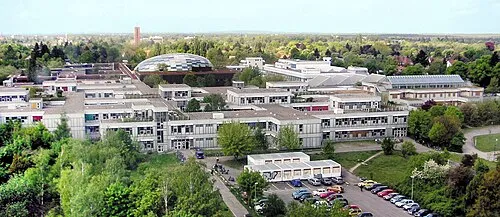 Public
Freie Universität Berlin
43,413 students
 Public
Humboldt-Universität zu Berlin
40,860 students
 Public
Technische Universität Berlin
34,550 students
 Public
Hochschule für Technik und Wirtschaft Berlin
14,956 students
 Public
Berliner Hochschule für Technik
12,344 students
 Public
Hochschule für Wirtschaft und Recht Berlin
12,184 students
Student Reviews
Verified reviews from current students, alumni and applicants.
No reviews yet. Be the first!
Verified students and alumni can share their experience below.
Write a review about Max Planck Institute for Molecular Genetics Open form ↓
How do I apply to Max Planck Institute for Molecular Genetics as an international student?
Non-EU applicants apply via uni-assist (document verification + APS certificate for some countries). EU applicants apply directly. You need a recognised degree, language certificate, motivation letter and CV. After admission, open a Sperrkonto and book a visa appointment at your local German embassy.
- Pick a programme — Browse the programme list above — filter by language, degree, field.
- Verify your eligibility — Check Anabin/APS for your country and degree-equivalence rules.
- Get language certificate — TestDaF/DSH for German, IELTS/TOEFL for English-taught programmes.
- Apply via uni-assist or directly — Submit by 15 July (winter) / 15 January (summer) deadlines.
- After admission: Sperrkonto + visa — Open the blocked account, get health insurance, attend embassy interview.