Max Planck Institute for Meteorology
The Max Planck Institutes, considered the heart of science and research in Germany, are prestigious institutions recognized worldwide. Located in Hamburg, the Max Planck Institute for Meteorology leads the scientific world with its groundbreaking research, especially in climate and meteorology. This institute is a significant hub for Turkish students looking for PhD and Master's programs in Germany, offering an international research environment.
Combined with Hamburg's dynamic student life and opportunities, the Max Planck Institute for Meteorology promises a unique experience for those aiming for an academic career. At AlmanyaUni, we're covering this special institute and what it's like to be a student in Hamburg in detail. You're in the right place for insights into city life and academic expectations, topics often discussed in forum threads like "STUDENTS - RESIDENTS IN HAMBURG."
Quick Facts
- University Name
- Max Planck Institute for Meteorology
- City
- Hamburg
- State
- Hamburg
- Type
- Public (State Research Institute)
- Programs Offered
- Primarily PhD programs
- Main Working Language
- Generally English (for PhD programs)
- HRK Member
- No
- Uni-Assist Member
- No
Max Planck Institute for Meteorology: A Hub of Scientific Excellence
The Max Planck Institutes are among Germany's and the world's most respected scientific research institutions. As its name suggests, the Max Planck Institute for Meteorology conducts globally significant work in meteorology, climate science, and ocean research. The institute uses state-of-the-art laboratories and supercomputers to develop complex climate models, investigate the impacts of climate change, and understand atmospheric processes. This offers unique research opportunities, especially for Turkish students aiming for an academic career at the PhD level.
The institute typically doesn't offer Bachelor's or Master's programs directly like a traditional university; instead, it serves as a center for PhD students and post-doctoral researchers. PhD programs are often conducted in collaboration with local universities like the University of Hamburg, allowing students to benefit from both the institute's research resources and the university's academic environment. Therefore, if you're looking for a Bachelor's program, it would be more appropriate to research other universities in Hamburg rather than this institute. However, for those passionate about climate science and wanting to pursue a PhD in an international research setting, the Max Planck Institute for Meteorology is definitely a place you should consider.
Being a Student in Hamburg: Pearl of the North
Hamburg, home to the Max Planck Institute for Meteorology, is one of Germany's most beautiful and livable cities. This city, often discussed by Turkish students under the heading "STUDENTS - RESIDENTS IN HAMBURG," stands out with its dynamic student population, rich cultural life, and green spaces. Built around the Elbe River and Alster Lake, Hamburg has an atmosphere reminiscent of Venice, with its canals and bridges. The presence of numerous universities and colleges in the city makes student life quite vibrant.
Transportation in Hamburg is highly developed; you can easily reach every part of the city with its public transport network (HVV). Many students benefit from affordable public transport thanks to the Semesterticket (semester ticket for public transport). Culturally rich, Hamburg offers students plenty of activities with its museums, theaters, concert halls (especially the Elbphilharmonie), and vibrant nightlife. Moreover, being a port city creates an international atmosphere and gives you the chance to meet people from different cultures. It's also quite easy to make new friends and expand your social circle through student clubs and communities.
Estimated Monthly Cost of Living
Places to Visit and Student Hangouts
The world's largest miniature railway exhibition, a fascinating place for visitors of all ages.
Details ↗Hamburg's iconic concert hall and architectural marvel, offering great city views.
Details ↗A UNESCO World Heritage site featuring historic warehouse district and a new city center where modern architecture meets history.
A large botanical garden and park in the heart of the city, ideal for relaxing and enjoying nature.
A large lake in the center of Hamburg, popular for walking, jogging, and boat trips.
Hamburg's famous entertainment and nightlife district, full of bars and clubs.
Student Life and Culture
Student life at the Max Planck Institute for Meteorology is a bit different from traditional universities. Since this is primarily a research institute, the student culture is focused on academic work and research. PhD students typically work in an international environment, alongside researchers from various countries. This offers a rich cultural exchange and the opportunity to build a global network.
Seminars, workshops, and conferences organized within the institute or in collaboration with the University of Hamburg greatly contribute to students' academic development. Social events often take the form of internal institute gatherings, department dinners, or small groups organized around common interests. Hamburg's general student culture, however, is quite vibrant. The city's many student clubs, sports groups, and cultural events offer plenty of options for those who want to balance academic intensity with social life. Bicycle use is quite common in Hamburg, and many students prefer cycling for transportation.
- International research environment and collaboration
- Academic seminars and workshops
- Social integration with other universities in Hamburg
- Cycling culture and eco-friendly transportation
- Rich cultural events and nightlife
Frequently Asked Questions
Is it possible to study Informatics (Computer Science) at the Max Planck Institute for Meteorology? ▼
The Max Planck Institute for Meteorology is primarily a research institute focused on climate and meteorology. While there isn't a direct Informatics department, there might be PhD projects that require computer science knowledge in areas like climate modeling and data analysis. Such projects are usually carried out in collaboration with relevant departments at the University of Hamburg. We recommend you check the institute's official website for current PhD position announcements.
Are there universities that offer conditional admission with B1-B2 level German? What's the situation at the Max Planck Institute? ▼
Research institutes like the Max Planck Institute for Meteorology typically focus on English proficiency (TOEFL/IELTS) for PhD programs; conditional admission based on German language skills is not common. The working language is largely English. Many other universities in Germany might offer conditional admission for Bachelor's or Master's programs with B1-B2 level German (after Studienkolleg or a language course). However, this is not the case for the Max Planck Institute.
Is the AT11 document valid as health insurance for a residence permit? ▼
Yes, for students coming from Turkey, the AT11 document can serve as a substitute for legal health insurance in Germany. However, this document might only cover emergencies, and its scope could be more limited compared to German public health insurance. After arriving in Germany, it's important to contact a German health insurance company (e.g., TK, AOK, Barmer) to clarify the AT11's coverage and whether you need additional insurance. In some cases, you might need to get supplementary insurance.
How should the departure date and insurance start date be set for a visa application? ▼
For the departure date on your visa application form, you should write the estimated date you plan to travel to Germany. Your travel health insurance's start date should be set to begin a few days before this departure date. Visa officers generally expect your insurance to be valid from the day you enter Germany. It's important to finalize these dates before your visa interview.
Which platform should I use to transfer money for a blocked account (Sperrkonto)? ▼
Money transfers for a blocked account (Sperrkonto) are usually done via platforms like Wise (formerly TransferWise), Remitly, or direct bank transfer. Wise is quite popular among Turkish students due to its low commission fees and fast transfer times. Before making a transfer, it's important to check which transfer methods your blocked account provider (e.g., Fintiba, Coracle) accepts and their current limits.
Uni-Assist calculated my grade average differently; what could be the reason? ▼
Uni-Assist translates grades using its own formula (the Bavarian Formula), which is adapted to the German education system. This formula might yield different results than translations you've done yourself or obtained from other websites. Uni-Assist evaluates not only your grade point average but also your courses and credits. If you believe there's a significant discrepancy, you can contact Uni-Assist for detailed information or review their documents explaining their translation methods. However, the Max Planck Institute for Meteorology is not a Uni-Assist member, so the Uni-Assist process will not apply when applying to this institute.
Don't forget to visit the official website for more information about the Max Planck Institute for Meteorology and your academic journey in Hamburg. At AlmanyaUni, we're always here to support you in your education and life adventure in Germany!
Max Planck Institute for Meteorology — Images
Programs
Location
Sources
Programs & Departments
3 active programs · 3 English · 0 NC-frei
Showing 1–3 of 3 programs
Bachelor
PhD
Doctoral Programme in Earth System Modelling (IMPRS-ESM)
ENInternational Max Planck Research School on Earth System Modelling (IMPRS-ESM)
View details →Earth System Modelling (IMPRS-ESM)
ENInternational Max Planck Research School on Earth System Modelling (IMPRS-ESM)
View details →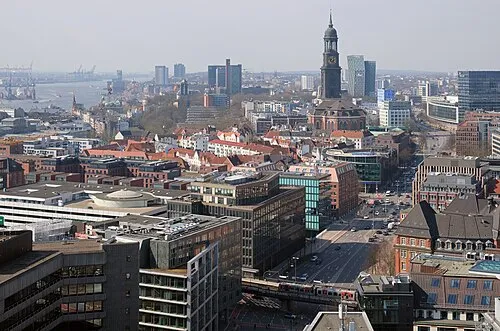
Hamburg
State: Hamburg
Where can I study? Universities in Hamburg
Universität Hamburg — university; the broadest range of programmes, campus in Rotherbaum/Eimsbüttel. Technische Universität Hamburg (TUHH) — technica...
more →Where can I live? Student housing in Hamburg
1. Studierendenwerk Hamburg dorm. 26 residences, about 4,770 places; rents are all-inclusive (heating and utilities included, internet and cable TV fr...
more →Monthly budget: student expenses in Hamburg
Universität Hamburg's own ranges: housing about €400–700 and other living expenses about €500–700 per month (excluding additional insurance and a car)...
more →More about Hamburg
Cost of living, housing, transport, student life and all universities.
Student Experiences
Share yours too →No experience shared yet.
Be the first to share an experience about Max Planck Institute for Meteorology and help other students.
Share your experienceOther universities in Hamburg
All → Public
Universität Hamburg
42,193 students
 Public
Hochschule für Angewandte Wissenschaften Hamburg
16,422 students

HFH · Hamburger Fern-Hochschule
14,265 students

Europäische Fernhochschule Hamburg
10,610 students

Institut B-10: Wasserbau
8,473 students
MSH Medical School Hamburg - University of Applied Sciences and Medical University
5,512 students
Student Reviews
Verified reviews from current students, alumni and applicants.
No reviews yet. Be the first!
Verified students and alumni can share their experience below.
Write a review about Max Planck Institute for Meteorology Open form ↓
How do I apply to Max Planck Institute for Meteorology as an international student?
Non-EU applicants apply via uni-assist (document verification + APS certificate for some countries). EU applicants apply directly. You need a recognised degree, language certificate, motivation letter and CV. After admission, open a Sperrkonto and book a visa appointment at your local German embassy.
- Pick a programme — Browse the programme list above — filter by language, degree, field.
- Verify your eligibility — Check Anabin/APS for your country and degree-equivalence rules.
- Get language certificate — TestDaF/DSH for German, IELTS/TOEFL for English-taught programmes.
- Apply via uni-assist or directly — Submit by 15 July (winter) / 15 January (summer) deadlines.
- After admission: Sperrkonto + visa — Open the blocked account, get health insurance, attend embassy interview.