Max Planck Institute for Heart and Lung Research
The Max Planck Institutes, the heart of scientific research in Germany, are globally recognized centers of scientific excellence. The Max Planck Institute for Heart and Lung Research, located in Frankfurt am Main, Germany's financial and cultural capital, focuses on groundbreaking research into heart and lung diseases. This institute offers unique opportunities for students aiming for advanced scientific careers in Germany, especially those looking to participate in doctoral (PhD) level research. It's not just an educational institution, but a cutting-edge research laboratory.
Frankfurt's dynamic environment, international student community, and rich cultural offerings will support your scientific endeavors while promising an enjoyable student life. This page is your guide to all the details you're curious about regarding the Max Planck Institute for Heart and Lung Research and student life in Frankfurt am Main. It also includes important tips for students specifically looking for German language courses or information about the visa appointment process.
Quick Facts
- Institute Name
- Max Planck Institute for Heart and Lung Research
- City
- Frankfurt am Main
- State
- Hessen
- Type
- Public (Part of the Max Planck Society)
- City Population (Frankfurt)
- ~760.000 (2023 tahmini)
- AlmanyaUni DB Program Count
- 2 (1 Bachelor's, 1 PhD - Note: The institute is primarily research-focused, and PhD programs are usually conducted in collaboration with partner universities.)
- HRK Member
- Hayır
- Uni-Assist Member
- Hayır
Research-Focused Excellence: A Leader in Heart and Lung Sciences
As its name suggests, the Max Planck Institute for Heart and Lung Research conducts in-depth studies to understand the molecular and cellular mechanisms of heart and lung diseases. As part of the Max Planck Society, it's globally recognized for scientific excellence and innovation. The institute utilizes the latest technologies in biology, medicine, and related disciplines to conduct basic and applied research, aiming to develop new treatments and prevent diseases.
It offers an international and multidisciplinary environment, especially for doctoral (PhD) students and postdoctoral researchers. You'll have the opportunity to work with leading scientists in the field, access state-of-the-art laboratories, and participate in international conferences. The institute's research is often conducted in collaboration with universities in and around Frankfurt am Main (like Goethe University), providing you access to a broad academic network. For students, it's an ideal platform to step into a scientific career in Germany and contribute to research that will have a global impact.
Frankfurt am Main: A Student-Friendly Metropolis
Frankfurt am Main, home to the Max Planck Institute for Heart and Lung Research, is one of Germany's most dynamic and international cities. Beyond being Europe's financial hub, its rich cultural life, historical charm, and green spaces offer students an enjoyable living experience. The city boasts a vibrant student population, hosting numerous universities and research institutes.
You'll find plenty of German language course options in Frankfurt, ranging from established institutions like the Goethe-Institut to private language schools. The city's public transport network is excellent, and students can usually use all public transport with their Semesterticket (semester ticket). Off-campus trips and events, like those to Mainz//Wiesbaden or 'Mini Frankfurt' gatherings, are also quite popular among student groups.
The city also has many Turkish restaurants, markets, and cultural associations, which can make your adaptation process easier. Consulates and relevant institutions for your visa appointment and other bureaucratic processes are located in or near the city, simplifying things for you. Frankfurt offers a rich experience, both academically and socially, making your student life in Germany unforgettable.
Estimated Monthly Cost of Living
Places to Visit and Student Hangouts
Frankfurt's historic city center and most famous square, reflecting traditional German architecture.
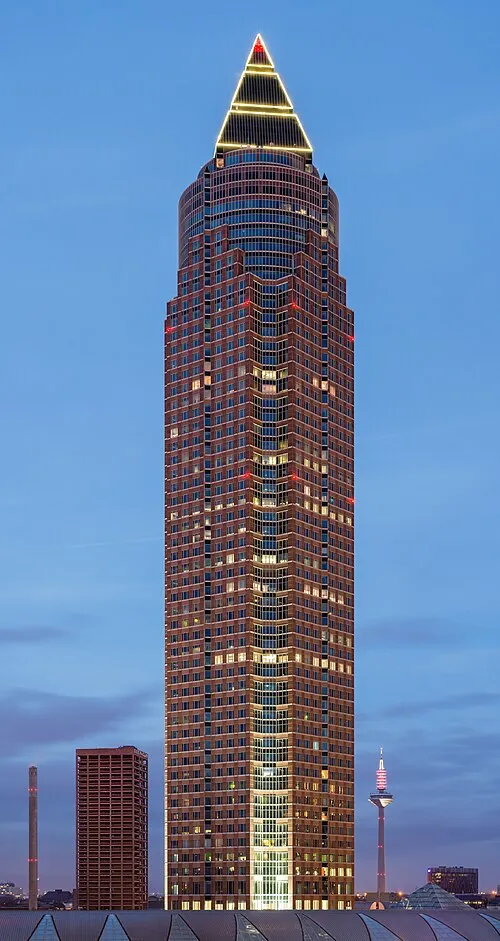
A skyscraper offering panoramic city views, especially popular at sunset.
A large and beautiful botanical garden housing plant species from all over the world.
A cultural hub along the Main River, home to numerous museums.
The birthplace and childhood home of the famous German writer Johann Wolfgang von Goethe.
A modern library frequently used by students in Frankfurt for studying and research.
Student Life and Culture
With its international and dynamic character, Frankfurt am Main offers students a rich social and cultural life. Thanks to the many universities and research institutes in the city, you'll have the chance to meet students from diverse cultures and build a global network. Student clubs and associations offer a wide range of activities, from sports events to cultural organizations.
Especially at research-focused institutions like the Max Planck Institute, scientific seminars, workshops, and conferences are a significant part of student life. Being a financial hub, the city also offers various opportunities for internships and part-time jobs (especially for Master's students, who typically have a 20-hour work permit). On weekends, you can walk along the Main River, visit the museums at Museumsufer, or spend time with friends at one of the many cafes in the city.
Frankfurt's nightlife is also quite vibrant, with various bars, clubs, and event venues. Local events like 'Mini Frankfurt' and easy access to nearby cities like Mainz and Wiesbaden provide many options for students to enjoy their free time.
- International and multicultural student environment
- Internship and job opportunities intertwined with the finance and business world
- Advanced public transport network (Semesterticket advantage)
- Rich cultural events and museums
- Numerous student clubs and social activities
Frequently Asked Questions
Do I need to bring 75 Euros in cash for the visa appointment, and are there any recommended German language courses in Frankfurt? ▼
Yes, visa appointment fees (e.g., 75 Euros) are usually paid in cash, but it's important to verify the latest information on the official website of the relevant consulate or Idata. In Frankfurt am Main, you'll find established German language schools like Goethe-Institut, Berlitz, and Inlingua. Additionally, various private language schools and university-offered language programs are available. We recommend doing thorough research to find a course that suits your needs and budget.
Are there people studying for a Master's (or doing research) in Frankfurt, or anyone who has received an admission offer or knows someone there? ▼
Frankfurt am Main hosts many academic institutions like Goethe University and the Max Planck Institutes. Because of this, there are numerous international students and researchers pursuing Master's degrees or conducting research in the city. You can connect with people in similar situations through social media groups, university forums, or AlmanyaUni Telegram groups to benefit from their experiences.
Do students coming to Germany for Master's studies have a 20-hour work permit, and can they work on platforms like Liferando? ▼
Yes, international students pursuing a Master's degree in Germany generally have a work permit for up to 140 working days a year (Arbeitstagekonto; a day of up to 4 hours counts as half a day; during the lecture period, a week of up to 20 hours can instead be counted as 2.5 working days). With this permit, you can work in places like Liferando (a food delivery platform) or other part-time jobs. However, it's crucial to check the details and restrictions of your work permit through your student visa and residence permit.
When do application deadlines for Master's programs usually close? ▼
Master's applications in Germany are typically made for two main semesters: Winter Semester (starting September/October) and Summer Semester (starting March/April). Winter semester applications usually close between May and July, while Summer semester applications close between November and January. However, application deadlines can vary for each university and program. It's critically important to check the current dates on the official website of the program you plan to apply for.
How can I find information about scholarships in Germany? ▼
There are many resources for students looking for scholarships in Germany. One of the most popular scholarship providers is DAAD (German Academic Exchange Service). Additionally, universities offer their own scholarship programs, as do foundations (e.g., political foundations, church foundations) and research institutes (like Max Planck) for their PhD programs. You can find detailed information by checking the AlmanyaUni website and the 'Finanzierung' or 'Scholarships' sections of the relevant universities.
Ready to learn more about the Max Planck Institute for Heart and Lung Research and start your educational journey in Germany? Take action now! Explore other universities and programs on the AlmanyaUni platform.
Programs
Sources
Programs & Departments
2 active programs · 2 English · 0 NC-frei
Showing 1–2 of 2 programs
Bachelor
PhD
Frankfurt am Main
State: Hesse
Study in Frankfurt: Shape Your Future
Frankfurt am Main is an attractive hub for students looking to pursue higher education in Germany. The city has a total of 11 universities, 10 of whic...
more →Life in Frankfurt: A Cosmopolitan Experience
Frankfurt am Main is known as one of Germany's most international cities. Being a financial and trade hub gives the city a dynamic, multicultural atmo...
more →Student Life and Culture
Frankfurt boasts a vibrant and diverse student culture, thanks to its international student community. Universities in the city offer various events a...
more →More about Frankfurt am Main
Cost of living, housing, transport, student life and all universities.
Student Experiences
Share yours too →No experience shared yet.
Be the first to share an experience about Max Planck Institute for Heart and Lung Research and help other students.
Share your experienceOther universities in Frankfurt am Main
All → Public
Goethe-Universität Frankfurt am Main
40,954 students
 Public
Frankfurt University of Applied Sciences
15,255 students
 Public
Frankfurt School of Finance & Management
4,391 students
 Public
Hochschule für Musik und Darstellende Kunst Frankfurt am Main
940 students

Tomorrow University of Applied Sciences
272 students
 Public
Philosophisch-Theologische Hochschule Sankt Georgen
226 students
Student Reviews
Verified reviews from current students, alumni and applicants.
No reviews yet. Be the first!
Verified students and alumni can share their experience below.
Write a review about Max Planck Institute for Heart and Lung Research Open form ↓
How do I apply to Max Planck Institute for Heart and Lung Research as an international student?
Non-EU applicants apply via uni-assist (document verification + APS certificate for some countries). EU applicants apply directly. You need a recognised degree, language certificate, motivation letter and CV. After admission, open a Sperrkonto and book a visa appointment at your local German embassy.
- Pick a programme — Browse the programme list above — filter by language, degree, field.
- Verify your eligibility — Check Anabin/APS for your country and degree-equivalence rules.
- Get language certificate — TestDaF/DSH for German, IELTS/TOEFL for English-taught programmes.
- Apply via uni-assist or directly — Submit by 15 July (winter) / 15 January (summer) deadlines.
- After admission: Sperrkonto + visa — Open the blocked account, get health insurance, attend embassy interview.