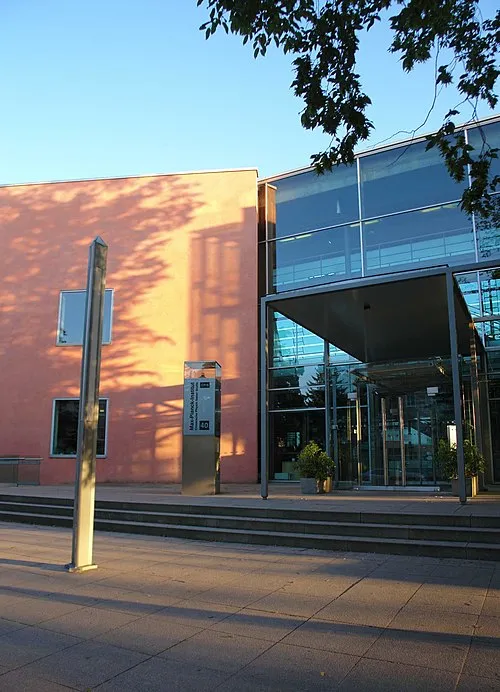
Max Planck Institute for Chemical Physics of Solids
List of Max Planck Institutes
The Max Planck Institutes, at the heart of scientific research in Germany, stand out with their globally recognized work. Specifically, the Max Planck Institute for Chemical Physics of Solids (MPI-CPfS), as one of Dresden's science and technology hubs, hosts groundbreaking research in chemical physics and solid-state physics. We know that many students are actively searching for information about universities and research institutions when they want to study in Germany. Many of you are particularly interested in information about Dresden. This page is designed to cover the PhD and research opportunities offered by MPI-CPfS, life in Dresden, and the topics you're most curious about if you're considering studying in Germany. Rather than a traditional university, MPI-CPfS is an institution focused on advanced research. It doesn't offer bachelor's programs, but it does provide unique opportunities for doctoral students aiming for a scientific career.
Quick Facts
- Institution Name
- Max Planck Institute for Chemical Physics of Solids
- City
- Dresden
- State
- Sachsen
- Institution Type
- State Research Institute
- Focus Areas
- Chemical Physics, Solid-State Physics, Materials Science
- Programs Offered
- Doctorate (PhD) and Research Opportunities
- Uni-Assist Membership
- No
Max Planck Institutes: The Pinnacle of Research
The Max Planck Society (Max-Planck-Gesellschaft) is one of Germany's most respected and leading scientific research organizations. Its institutes focus on groundbreaking discoveries in fundamental sciences, bringing together scientists from around the world. The Max Planck Institute for Chemical Physics of Solids (MPI-CPfS) is a key part of this prestigious network. It doesn't offer bachelor's or master's programs like a traditional university; instead, it provides high-level research environments for doctoral students and postdoctoral researchers. If you're aiming for a scientific career, want to work in state-of-the-art laboratories, and conduct research alongside expert professors (questions like 'Wie viel ist ein Professor wert?' – 'How much is a professor worth?' – often asked in forums, show the importance placed on academics), then MPI-CPfS could be the ideal place for you. The research conducted here spans a wide range, from the discovery of new materials to energy storage solutions, and is often carried out through international collaborations.
Dresden: A City of Science, Art, and Student Life
Dresden, home to the Max Planck Institute for Chemical Physics of Solids, is a city renowned for its historical and cultural richness, located on the Elbe River in Germany's Saxony state. The popularity of forum topics like 'Anyone with info on Dresden, Help Please!!!' among students shows just how much interest there is in the city. While Dresden is known as the 'Florence on the Elbe' for its Baroque architecture, art galleries, and museums, it's also a strong hub for science and technology. It boasts a vibrant student population, thanks to its many universities and research institutes. Living in the city as a student offers advantages like easy access to cultural events and reasonable cost of living. Biking is very common, and the public transport network is well-developed. You'll find various student discounts and social activities. While pursuing your PhD at MPI-CPfS, you can benefit from Dresden's dynamic environment, explore the city's historical fabric in your free time, or enjoy pleasant moments along the Elbe River.
PhD and Research Opportunities at the Max Planck Institute
The Max Planck Institute for Chemical Physics of Solids offers PhD programs and research positions, particularly in chemical physics, solid-state physics, and materials science. The institute actively supports international doctoral students, providing them with opportunities to conduct world-class research. Application processes are typically handled directly through the institute or the relevant research group; platforms like Uni-Assist (a centralized application service for international students) are not used. Therefore, if you're considering applying, it's important to regularly check the 'Career' or 'PhD Programs' sections on the institute's official website. PhD programs are generally conducted in English, which is a significant advantage for international students. The institute offers students not only academic knowledge but also development opportunities in areas like scientific communication, project management, and leadership. Pursuing your PhD here means becoming part of an international scientific network and building a strong foundation for your future academic or industrial career.
Estimated Monthly Cost of Living in Dresden
Places to Visit and Student Hangouts in Dresden
An impressive Baroque church that has become a symbol of Dresden.
A Baroque palace complex famous for its magnificent gardens and art museums.
A pleasant promenade overlooking the Elbe River, known as 'Europe's Balcony'.
A popular spot for students and young people, with alternative cafes, bars, and boutique shops.
The city's largest park, ideal for relaxing, exercising, or picnicking.
The state and university library, with modern facilities and an extensive collection.
Student Life and Culture in Dresden
Dresden boasts a very lively and international student environment, thanks to its numerous universities and research institutes. Students studying at research-focused institutions like the Max Planck Institute often form close ties with their research groups and become part of a global scientific network through opportunities like attending international conferences. The city offers many student clubs, sports facilities, and cultural events. Cafes along the Elbe River, bars in the Neustadt district, and student-friendly restaurants are central to social life. Biking is a popular way to get around the city, and many students can use public transport for free or at a very low cost thanks to the Semesterticket (semester public transport pass). Dresden also stands out for its affordable accommodation options and generally reasonable cost of living, making it an attractive choice for students.
- Vibrant and international student community
- Rich cultural and artistic events
- Widespread and safe bicycle use
- Affordable student accommodation options
- Well-developed public transport network and student discounts
Frequently Asked Questions
Can I pursue a bachelor's degree at the Max Planck Institute for Chemical Physics of Solids? ▼
No, Max Planck Institutes do not offer bachelor's or master's programs like traditional universities. MPI-CPfS is an institution focused on fundamental scientific research, primarily offering opportunities for PhD students and postdoctoral researchers.
How long does a visa application take in Germany? Is one month normal for a 41f visa? ▼
Visa application processing times can vary depending on the consulate's workload, the type of application, and the time of year. The statement 'up to one month' from the iData office is an estimate. The process can take longer, especially during peak seasons or if additional documents are requested. Experiences of students who applied recently and received a response may differ, so it's best to be patient and follow up on the current status through official channels (iData or the consulate).
If the visa interview takes place at the iData office, do they take your phone? ▼
Yes, generally, during visa interviews at iData offices or consulates, electronic devices (like phones, tablets, etc.) are not allowed inside due to security procedures. It's advisable to leave such items outside or not bring them with you.
I came with an AT11 form for health insurance, what should I write on the residence permit application form? ▼
If you came from Turkey with an AT11 form and haven't taken out additional insurance in Germany, you can state on the form that you arrived with AT11. However, for long-term stays in Germany, you are generally expected to get German student health insurance. It's important to confirm the scope and validity of AT11 in Germany with the local foreigners' office (Ausländerbehörde) with the local foreigners' office (Ausländerbehörde) (the foreigners' authority) with the local foreigners' office (Ausländerbehörde) (the foreigners' authority).
How should the departure date and insurance start date be on the visa application form? ▼
For the departure date on your visa application form, you should write the first date you plan to travel to Germany. Your travel health insurance start date should also begin on or before this departure date and cover your entire stay in Germany. Generally, your visa start date might be determined based on your insurance start date.
I created my Uni-Assist profile 2 years ago, can I still use it or should I open a new one? ▼
Uni-Assist profiles generally remain current for a certain period. However, if your profile is 2 years old, you might need to check and update your information (especially contact and educational history) for the current application period. It's usually possible to update and use your existing profile instead of creating a new one. However, the Max Planck Institute for Chemical Physics of Solids is not a Uni-Assist member, so applications to this institute are made directly.
To learn more about PhD and research opportunities at the Max Planck Institute for Chemical Physics of Solids, visit the institute's official website and shape your scientific career in Germany!
Community Discussions about Max Planck Institute for Chemical Physics of Solids
Source: DeutschStudent-
Anyone with info on Dresden, Help Please!!!
eyalet50,8789 replies -
How much is a professor worth?
almanca13,63919 replies -
Is there an early Anmeldung (registration) appointment form in Hannover?
eyalet25,0007 replies -
Free and Licensed Alternative to Microsoft Office: OpenOffice
teknik23,31812 replies -
Office365 for Students - Germany -
teknik22,43812 replies
These threads come from an external source (community.deutschstudent.com). To join ApplyToGerman (AlmanyaUni)'s own forum visit /forum.
Max Planck Institute for Chemical Physics of Solids — On the AlmanyaUni Forum
Experiences from our international student community
Max Planck Institute for Chemical Physics of Solids — Images
Programs
Location
Sources
Programs & Subjects
2 active programs · 2 English · 0 NC-frei
Bachelor (1)
PhD (1)

Dresden
State: Saxony
University Education in Dresden: Why You Should Choose It
Dresden is home to TU Dresden, one of Germany's most prestigious technical universities. In our community insights, the frequently asked question, 'Is...
more →Life in Dresden: Where History Meets Modernity
Despite suffering extensive destruction during World War II, Dresden has regained its former glory through meticulous restoration, successfully preser...
more →Student Life and Culture
With its young population and numerous universities, Dresden boasts a vibrant student culture. International student communities in the city help newc...
more →Dresden more about
Cost of living, housing, transport, student life and all universities.
Student Experiences
Share yours too →No experience shared yet.
Be the first to share an experience about Max Planck Institute for Chemical Physics of Solids and help other students.
Share your experienceDresden other universities in this city
All → Public
Dresden University of Technology
27,812 students
 Public
Hochschule für Technik und Wirtschaft Dresden – University of Applied Sciences
4,640 students

DIU - Dresden International University GmbH
911 students
 HAW
HAW
Evangelische Hochschule Dresden
828 students
 Public
Hochschule für Musik Carl Maria von Weber Dresden
705 students
 Public
Hochschule für Bildende Künste Dresden
594 students
💬 Student Reviews
Verified reviews from current students, alumni and applicants.
No reviews yet. Be the first!
Verified students and alumni can share their experience below.
✍️ Write a review about Max Planck Institute for Chemical Physics of Solids (List of Max Planck Institutes) Open form ↓
How do I apply to Max Planck Institute for Chemical Physics of Solids (List of Max Planck Institutes) as an international student?
Non-EU applicants apply via uni-assist (document verification + APS certificate for some countries). EU applicants apply directly. You need a recognised degree, language certificate, motivation letter and CV. After admission, open a Sperrkonto and book a visa appointment at your local German embassy.
- Pick a programme — Browse the programme list above — filter by language, degree, field.
- Verify your eligibility — Check Anabin/APS for your country and degree-equivalence rules.
- Get language certificate — TestDaF/DSH for German, IELTS/TOEFL for English-taught programmes.
- Apply via uni-assist or directly — Submit by 15 July (winter) / 15 January (summer) deadlines.
- After admission: Sperrkonto + visa — Open the blocked account, get health insurance, attend embassy interview.