Max Planck Institute for Biogeochemistry
For Turkish students seeking a world-class center for biogeography and ecosystem research in Germany, the Max Planck Institute for Biogeochemistry in Jena offers a unique opportunity. This institute holds a special place among German universities, particularly welcoming aspiring scientists who wish to pursue advanced research at the doctoral (PhD) level. In Jena's calm and science-focused atmosphere, you can participate in groundbreaking projects aimed at understanding fundamental natural processes.
At AlmanyaUni, we aim to convey the intricacies of applying to such research-focused institutions and living in Germany to Turkish students. As frequently seen in our forums, where questions like 'Is there a formula for early registration (Anmeldung) appointments in Hannover?' are common, bureaucratic processes and application details in Germany are among the most curious topics for our students. Institutions like the Max Planck Institute for Biogeochemistry can differ from traditional university application processes, so accessing accurate information is critically important.
Quick Facts
- University Name
- Max Planck Institute for Biogeochemistry
- City
- Jena
- State
- Thüringen
- Type
- Public Research Institute
- Programs Offered
- Doctoral (PhD) programs and research projects
- HRK Member
- No
- Uni-Assist Member
- No (Direct application)
Get to Know the Max Planck Institute for Biogeochemistry
The Max Planck Institute for Biogeochemistry (MPI-BGC) is one of the world's leading research institutes in biogeography, affiliated with Germany's prestigious Max Planck Society. The institute deeply investigates the fundamental processes of life and ecosystems on Earth, in the context of climate change and human interactions. Critical ecosystem processes such as the carbon cycle, water cycle, and nitrogen cycle are researched using a multidisciplinary approach, incorporating satellite observations, laboratory experiments, and modeling techniques.
Located in Jena, this institute offers an international research environment, bringing together scientists from all over the world. Doctoral students have the opportunity to conduct their own research projects under the guidance of specialized supervisors and participate in global scientific discussions. The institute's primary goal is to produce scientific solutions for environmental problems that are critically important for the future of our planet. Therefore, studying here means not only pursuing an academic career but also contributing to global environmental issues.
Student and Researcher Life in Jena: Science and Nature Intertwined
Jena, located in the German state of Thüringen, is a city with a rich history in science and academia. Known especially for its past in optics and precision engineering, the city continues to be a center for science and research today. Alongside esteemed research institutions like the Max Planck Institute for Biogeochemistry, the Friedrich Schiller University Jena adds a vibrant student atmosphere to the city.
Jena offers a calmer life, closer to nature, away from the crowds of large metropolises like Hamburg. Situated on the banks of the Saale River, the city stands out with its green spaces, hiking trails, and historic buildings. Offering affordable living costs and a high quality of life for students and researchers, Jena provides an ideal environment for you to focus on your academic work.
Cultural events, cafes, and bars in the city also offer opportunities for socializing after an intensive academic schedule. Having an international student and researcher community provides opportunities to meet people from different cultures and build a global network. Jena is not just a city for education, but also a living space where scientific discoveries and natural beauty converge.
Estimated Monthly Cost of Living - Jena
Places to Visit and Student Hangouts in Jena
One of Germany's oldest botanical gardens, ideal for scientific research and relaxation.
The world's oldest continuously operating planetarium, offering fascinating shows for astronomy enthusiasts.
The city's tallest building, offering magnificent city views from its top-floor restaurant.
The historic house where the famous German poet Friedrich Schiller once lived and worked.
A popular area for walking, cycling, and relaxation, reflecting the city's natural beauty.
Student and Researcher Life and Culture
The student (doctoral student) culture at the Max Planck Institute for Biogeochemistry is somewhat different from a traditional university campus. This is more of an international research community. Students are typically integrated into their own research groups, and their daily lives revolve around laboratory work, data analysis, seminars, and conferences.
Social interactions are often shaped by internal institute events, shared coffee breaks, and excursions organized by research groups. The institute offers orientation programs and support services for new international researchers. It's also possible to connect with other university students in Jena through various events, but the focus remains on scientific collaboration and academic development.
Bicycle culture is quite prevalent in the city, and many students use bikes for transportation. Thanks to Jena's compact structure, you can easily reach everywhere.
- International and multidisciplinary research environment
- Intensive scientific collaboration and seminars
- Peaceful life close to nature
- Jena's student-friendly atmosphere
- Widespread use of bicycles for transportation
Frequently Asked Questions
Are there programs at the Max Planck Institute for Biogeochemistry that offer conditional admission for Computer Science (Informatik) with B1-B2 German language proficiency? ▼
The Max Planck Institute for Biogeochemistry is an institute that primarily offers doctoral programs and advanced research in biogeography. It does not have programs offering conditional admission at the bachelor's or master's level, especially for fields like Computer Science (Informatik). Applications to the institute are typically in English and require high academic qualifications.
I came with an AT11 document for my residence permit; they're asking for my health insurance company. Is it okay if I just write 'AT11'? ▼
Yes, the AT11 document indicates that your health insurance from Turkey is valid in Germany under the social security agreement between the two countries. It's generally fine to write 'AT11' on your residence permit application. However, once you arrive in Germany, it's crucial to contact a local health insurance provider (e.g., AOK, TK) to register your AT11 and confirm its validity in Germany.
What departure date did you write on your visa application form? Can it be based on your insurance start date? ▼
On the visa form, you should write a reasonable departure date that aligns with when you plan to travel to Germany and is close to your insurance start date. It can often be a few days before your insurance begins, but it's essential that your insurance is valid from your entry into Germany. Your insurance end date can also affect your visa duration, so make sure your insurance covers a sufficient period.
Should we write the date we filled out the form or the date of our visa interview on the visa application form? ▼
For the date on the visa application form, you should write the date you completed the form. This indicates when the form was prepared and is independent of your visa interview date.
I have travel health insurance; should I answer 'yes' or 'no' to the 'Do you have health insurance?' question on the visa form? ▼
If you plan to stay in Germany as a long-term student, you must have student health insurance (public or private) that complies with German laws. Travel health insurance alone is usually not sufficient for a long-term visa. Therefore, if you haven't yet arranged valid health insurance for Germany, you might need to answer 'no' or 'not yet' to the question 'Do you have valid health insurance in Germany?' on the visa form and explain the situation during your visa interview. The best approach is to secure student health insurance before you arrive in Germany.
For a blocked account (Sperrkonto), which platforms are generally used for money transfers? Does anyone know? ▼
Money transfers for a blocked account (Sperrkonto) are typically done through recognized providers in Germany like Fintiba, Coracle, or Expatrio, which are accepted for visa processes. These platforms allow you to securely transfer and block your funds in Germany.
Explore the AlmanyaUni platform for more information about the Max Planck Institute for Biogeochemistry or other study opportunities in Germany. Join our forums for your questions or benefit from our expert consulting services!
Max Planck Institute for Biogeochemistry — Images
Programs
Location
Sources
Programs & Departments
2 active programs · 2 English · 0 NC-frei
Showing 1–2 of 2 programs
Bachelor
PhD

Jena
State: Thuringia
Study and Research Opportunities in Jena
Jena is one of Germany's leading centers for education and research. The city's academic identity began with the venerable Friedrich-Schiller-Universi...
more →Jena's Location and Quality of Life
Jena is the second-largest city in the Thuringia state, after the capital Erfurt, and a significant part of the Central German Metropolitan Region. It...
more →Student Life and Culture
Jena is a true student city, home to over 23,000 students. The city's young and dynamic population keeps social life vibrant. Student clubs, sports ev...
more →More about Jena
Cost of living, housing, transport, student life and all universities.
Student Experiences
Share yours too →No experience shared yet.
Be the first to share an experience about Max Planck Institute for Biogeochemistry and help other students.
Share your experienceOther universities in Jena
All → Public
Friedrich-Schiller-Universität Jena
16,069 students
 Public
Ernst-Abbe-Hochschule Jena
4,052 students
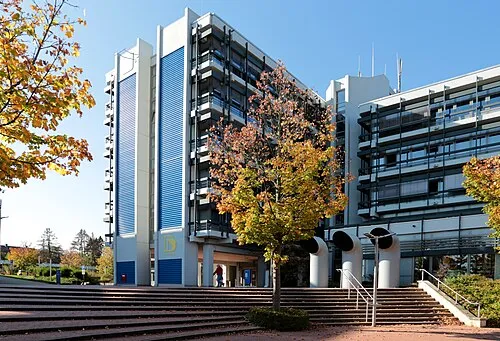 Public
Fernuniversität in Hagen
63,410 students
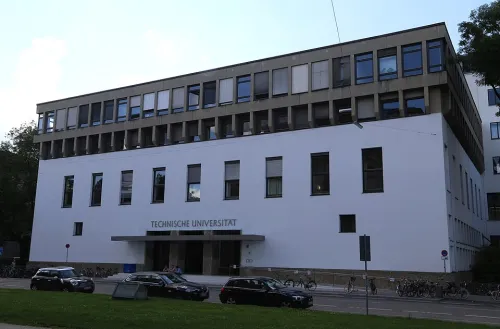 Public
Technische Universität München
55,562 students
 Public
Ludwig-Maximilians-Universität München
53,609 students
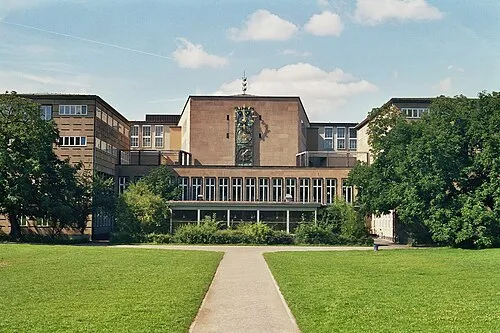 Public
Universität zu Köln
47,238 students
Student Reviews
Verified reviews from current students, alumni and applicants.
No reviews yet. Be the first!
Verified students and alumni can share their experience below.
Write a review about Max Planck Institute for Biogeochemistry Open form ↓
How do I apply to Max Planck Institute for Biogeochemistry as an international student?
Non-EU applicants apply via uni-assist (document verification + APS certificate for some countries). EU applicants apply directly. You need a recognised degree, language certificate, motivation letter and CV. After admission, open a Sperrkonto and book a visa appointment at your local German embassy.
- Pick a programme — Browse the programme list above — filter by language, degree, field.
- Verify your eligibility — Check Anabin/APS for your country and degree-equivalence rules.
- Get language certificate — TestDaF/DSH for German, IELTS/TOEFL for English-taught programmes.
- Apply via uni-assist or directly — Submit by 15 July (winter) / 15 January (summer) deadlines.
- After admission: Sperrkonto + visa — Open the blocked account, get health insurance, attend embassy interview.