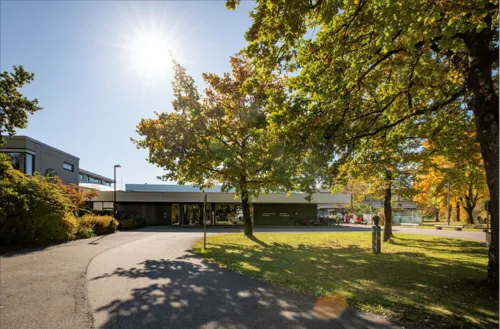
IMPRS for Molecules of Life (IMPRS-ML)International Max Planck Research School for Molecules of Life (IMPRS-ML)
Language Requirements
Which Professions Does This Program Open Up?
Related profession searches from Bundesagentur für Arbeit (BERUFENET) data:
Explore all professions →Similar Programs
Applied Biology (BSc)
Hochschule Bonn-Rhein-Sieg
Doctorate
Applied Mathematics
Hochschule Mittweida
Doctorate
Bachelor of Science in Applied Chemistry
FH Aachen University of Applied Sciences
Doctorate
Bachelor of Science in Biochemistry and Cell Biology (BCCB)
Constructor University Bremen
Doctorate
Bachelor of Science in Mathematics
Universität Passau
Doctorate
Bachelor of Science in Mathematics, Modelling and Data Analytics
Constructor University Bremen
Doctorate
How do I apply to IMPRS for Molecules of Life (IMPRS-ML) at Max Planck Institute of Biochemistry?
Most international applicants apply via uni-assist (document verification + APS for some countries). Prepare your secondary/Bachelor diploma, transcripts, language certificate (DSH/TestDaF or IELTS/TOEFL), motivation letter and CV. Non-EU students also need a Sperrkonto (~11,904 EUR/year) for the visa.
- Check requirements — Verify your degree is recognised + meet language/grade thresholds.
- Get language certificate — TestDaF / DSH for German programmes, IELTS / TOEFL for English.
- Submit via uni-assist (non-EU) — Document review + APS if your country requires it (China, India, Pakistan, Vietnam, etc.).
- Apply directly or via uni portal — Some universities accept direct applications — check the official programme page.
- Open Sperrkonto + apply for visa — After admission, deposit 11,904 EUR, get health insurance, book embassy appointment.
Frequently Asked Questions
Quick answers about IMPRS for Molecules of Life (IMPRS-ML) at Max Planck Institute of Biochemistry
Is IMPRS for Molecules of Life (IMPRS-ML) at Max Planck Institute of Biochemistry taught in German or English? ▼
This PhD programme is taught in English. Make sure to check the language requirements (e.g. TestDaF, DSH, IELTS or TOEFL) before applying.
How much does the IMPRS for Molecules of Life (IMPRS-ML) programme cost? ▼
No tuition fee (only semester contribution). International students should also budget around 800–1000 EUR/month for living costs in Germany.
What are the admission requirements for IMPRS for Molecules of Life (IMPRS-ML) at Max Planck Institute of Biochemistry? ▼
Typical requirements include: a recognised secondary/undergraduate degree, proof of language proficiency (English), and (for non-EU applicants) a uni-assist application plus financial proof (Sperrkonto ~11.904 EUR/year).
When is the application deadline? ▼
Application deadlines vary: winter semester usually closes on 15 July, summer semester on 15 January. Always confirm the exact deadline on the official university website.
Can I work in Germany while studying IMPRS for Molecules of Life (IMPRS-ML)? ▼
Yes. International students may work up to 140 working days a year without additional permission (a day of up to 4 hours counts as half a day). After graduation you can apply for an 18-month job-seeker permit.
How do I apply to Max Planck Institute of Biochemistry — directly or via uni-assist? ▼
Most German universities accept international applications through uni-assist for document verification. Some unis accept direct applications — check the programme page on the official site.