Germany's Student Work Limits Increased: You Can Earn More Now!
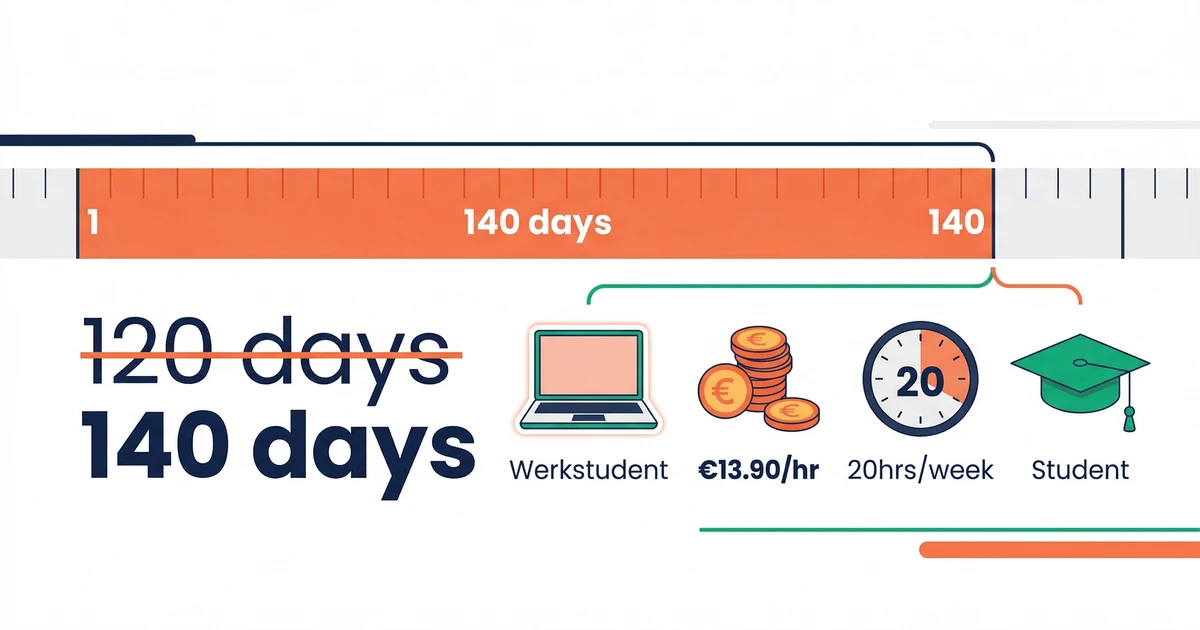
International students in Germany can now work up to 140 full days a year, up from 120. This change means you can earn more and gain valuable career experience while studying.
Germany's Student Work Limits Increased: You Can Earn More Now!
Germany has made a significant decision that will benefit international students! Starting March 1, 2024, and fully effective by the 2026 academic year, your annual work limit has been raised from 120 full days to 140 full days (or from 240 half days to 280 half days). This is part of the Fachkräfteeinwanderungsgesetz (Skilled Immigration Act) reforms, offering you more flexibility and better earning opportunities. While the rule of working a maximum of 20 hours per week during the semester remains, your potential average annual earnings could increase from around 10,500 Euros to over 12,000 Euros. Keep in mind that by 2026, the minimum wage is projected to be 13.90 Euros per hour.
Why This Matters for You
This change is a big opportunity to become more financially comfortable while studying in Germany and to get a solid start on your career. Werkstudent (working student) positions, in particular, are now even more attractive. In these roles, you can gain relevant experience in your field and often earn significantly above the minimum wage, typically between 14 and 25 Euros per hour. What's more, as a Werkstudent, you're exempt from unemployment and long-term care insurance contributions, meaning a larger portion of your earnings stays in your pocket. For example, if you work 20 hours a week in the tech sector at 18 Euros an hour, you could earn approximately 1,440 Euros per month. For many cities outside of Munich, this is a sufficient amount to cover your cost of living.
What You Should Do Next
First, you should re-evaluate your budget and job search strategy, considering these new limits and earning potential. Focusing on Werkstudent positions can give you the best return, both financially and for your career development. You can also look into Minijob (a job with earnings up to 538 Euros per month, typically tax-free) or Studentische Hilfskraft (HiWi) (university assistant positions) within your university. Make sure to research which type of job suits you best and understand the tax implications. Always verify current information from official sources.
Source: GradGermany – Germany Student Work Hours 2026: 140-Day Rule Explained