
The Contemporary Puppet Art (Zeitgenössische Puppenspielkunst) diploma program focuses on the performer as the central element. The four-year study begins with the fundamentals of acting and animation of puppets and objects. From the beginning, students learn to develop their own stories, making this program ideal for those who want to perform on stage while developing their own artistic authorship. Throughout the program, students work with different forms of puppets in scene studies. With only 10 students per year, the supervision is highly individualized, providing space for students to pursue their own artistic ideas. The university's network helps students find the right partners and establish practical connections early on. The education concludes with a diploma as a Puppeteer/Performing Artist.
The program is structured into basic studies (Grundstudium, semesters 1-5) and main studies (Hauptstudium, semesters 6-8). The basic studies focus on establishing the fundamentals of animation, puppetry, and acting, progressing from traditional puppet forms (mask, mouth puppets, marionettes) to more complex arrangements including digital media. The main studies allow students to deepen their profile and develop their own 'theater languages'. Students learn to see themselves not just as performers but as comprehensive stage artists who contribute to concepts, develop texts, incorporate partners from other art forms, and initiate creative processes. The main studies include a studio production typically created in cooperation with a theater, and in the 4th year, students develop their free diploma projects and ensemble diplomas, often in collaboration with theaters or festivals.
The curriculum includes a wide range of subjects: Animation (bringing inanimate materials to life), Digital Media (combining puppetry with virtual spaces and new technologies), Hand Puppets, Masks, Puppet Control Techniques, Speech and Voice Training, Theater History/Puppet Theater History/Dramaturgy, Acting, Movement (including acrobatics, aikido, pantomime, fencing, tap dancing, and dance), Verse Theory, Free Projects, Studio Productions, Ensemble Productions, Hybrid Forms (creating mixed puppet forms), Cultural Management (for freelance artists), Music, Puppet Building Technology, Theory of Puppet Art, Marionettes, and Design Theory.
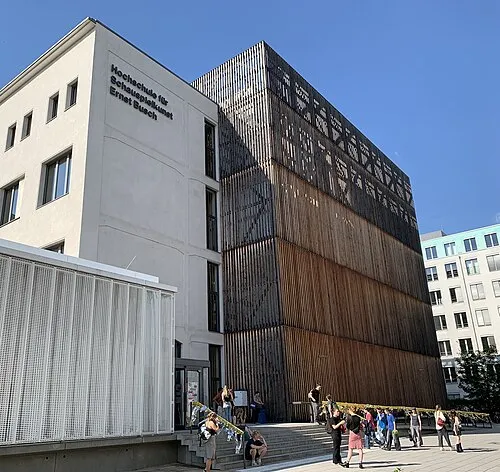
Sonstiges
Deutsch
Kunst, Kunstwissenschaft
Zeitgenössische Puppenspielkunst
Other
Über das Programm
▶ Den originalen englischen Text anzeigen
The Contemporary Puppet Art (Zeitgenössische Puppenspielkunst) diploma program focuses on the performer as the central element. The four-year study begins with the fundamentals of acting and animation of puppets and objects. From the beginning, students learn to develop their own stories, making this program ideal for those who want to perform on stage while developing their own artistic authorship. Throughout the program, students work with different forms of puppets in scene studies. With only 10 students per year, the supervision is highly individualized, providing space for students to pursue their own artistic ideas. The university's network helps students find the right partners and establish practical connections early on. The education concludes with a diploma as a Puppeteer/Performing Artist.
The program is structured into basic studies (Grundstudium, semesters 1-5) and main studies (Hauptstudium, semesters 6-8). The basic studies focus on establishing the fundamentals of animation, puppetry, and acting, progressing from traditional puppet forms (mask, mouth puppets, marionettes) to more complex arrangements including digital media. The main studies allow students to deepen their profile and develop their own 'theater languages'. Students learn to see themselves not just as performers but as comprehensive stage artists who contribute to concepts, develop texts, incorporate partners from other art forms, and initiate creative processes. The main studies include a studio production typically created in cooperation with a theater, and in the 4th year, students develop their free diploma projects and ensemble diplomas, often in collaboration with theaters or festivals.
The curriculum includes a wide range of subjects: Animation (bringing inanimate materials to life), Digital Media (combining puppetry with virtual spaces and new technologies), Hand Puppets, Masks, Puppet Control Techniques, Speech and Voice Training, Theater History/Puppet Theater History/Dramaturgy, Acting, Movement (including acrobatics, aikido, pantomime, fencing, tap dancing, and dance), Verse Theory, Free Projects, Studio Productions, Ensemble Productions, Hybrid Forms (creating mixed puppet forms), Cultural Management (for freelance artists), Music, Puppet Building Technology, Theory of Puppet Art, Marionettes, and Design Theory.
The program is structured into basic studies (Grundstudium, semesters 1-5) and main studies (Hauptstudium, semesters 6-8). The basic studies focus on establishing the fundamentals of animation, puppetry, and acting, progressing from traditional puppet forms (mask, mouth puppets, marionettes) to more complex arrangements including digital media. The main studies allow students to deepen their profile and develop their own 'theater languages'. Students learn to see themselves not just as performers but as comprehensive stage artists who contribute to concepts, develop texts, incorporate partners from other art forms, and initiate creative processes. The main studies include a studio production typically created in cooperation with a theater, and in the 4th year, students develop their free diploma projects and ensemble diplomas, often in collaboration with theaters or festivals.
The curriculum includes a wide range of subjects: Animation (bringing inanimate materials to life), Digital Media (combining puppetry with virtual spaces and new technologies), Hand Puppets, Masks, Puppet Control Techniques, Speech and Voice Training, Theater History/Puppet Theater History/Dramaturgy, Acting, Movement (including acrobatics, aikido, pantomime, fencing, tap dancing, and dance), Verse Theory, Free Projects, Studio Productions, Ensemble Productions, Hybrid Forms (creating mixed puppet forms), Cultural Management (for freelance artists), Music, Puppet Building Technology, Theory of Puppet Art, Marionettes, and Design Theory.
Welche Berufe eröffnet dieses Programm?
Verwandte Berufssuchen aus Daten der Bundesagentur für Arbeit (BERUFENET):
Alle Berufe entdecken →Fächer / Themenbereiche
Puppet Art
Ähnliche Programme
Conducting
Hochschule für Musik und Theater Hamburg
Other
Frames of Attention
Muthesius Kunsthochschule
Other
Textile Arts
Burg Giebichenstein Kunsthochschule Halle
Other
Zeichenzirkel
Muthesius Kunsthochschule
Other
Meisterklasse
Hochschule für Musik Würzburg
Other
Schriftgestaltung
Muthesius Kunsthochschule
Other
Wie bewerbe ich mich für Zeitgenössische Puppenspielkunst an der Hochschule für Schauspielkunst Ernst Busch Berlin?
Die meisten internationalen Bewerber bewerben sich über uni-assist (Dokumentenprüfung + APS für einige Länder). Bereite dein Abitur-/Bachelor-Diplom, Zeugnisse, Sprachzertifikat (DSH/TestDaF oder IELTS/TOEFL), Motivationsschreiben und Lebenslauf vor. Nicht-EU-Studenten benötigen für das Visum auch ein Sperrkonto (~11.904 EUR/Jahr).
- Anforderungen prüfen — Überprüfe, ob dein Abschluss anerkannt ist + erfülle die Sprach-/Notenschwellen.
- Sprachzertifikat erwerben — TestDaF / DSH für deutsche Studiengänge, IELTS / TOEFL für englische.
- Über uni-assist einreichen (Nicht-EU) — Dokumentenprüfung + APS, falls dein Land dies erfordert (China, Indien, Pakistan, Vietnam usw.).
- Direkt oder über das Uni-Portal bewerben — Einige Universitäten akzeptieren Direktbewerbungen — überprüfe die offizielle Programmseite.
- Sperrkonto eröffnen + Visum beantragen — Nach der Zulassung 11.904 EUR einzahlen, Krankenversicherung abschließen, Botschaftstermin buchen.
Häufig gestellte Fragen
Kurze Antworten zu Zeitgenössische Puppenspielkunst an der Hochschule für Schauspielkunst Ernst Busch Berlin
Wird Zeitgenössische Puppenspielkunst an der Hochschule für Schauspielkunst Ernst Busch Berlin auf Deutsch oder Englisch unterrichtet? ▼
Dieser Other Studiengang wird in Deutsch unterrichtet. Stelle sicher, dass du die Sprachanforderungen (z.B. TestDaF, DSH, IELTS oder TOEFL) vor der Bewerbung überprüfst.
Wie viel kostet der Studiengang Zeitgenössische Puppenspielkunst? ▼
Keine Studiengebühren (nur Semesterbeitrag). Internationale Studierende sollten zusätzlich etwa 800–1000 EUR/Monat für Lebenshaltungskosten in Deutschland einplanen.
Was sind die Zulassungsvoraussetzungen für Zeitgenössische Puppenspielkunst an der Hochschule für Schauspielkunst Ernst Busch Berlin? ▼
Typische Anforderungen sind: ein anerkannter Sekundar-/Bachelorabschluss, Nachweis der Sprachkenntnisse (Deutsch) und (für Nicht-EU-Bewerber) eine uni-assist Bewerbung plus Finanzierungsnachweis (Sperrkonto ~11.904 EUR/Jahr).
Wann ist die Bewerbungsfrist? ▼
Die Bewerbungsfristen variieren: Das Wintersemester endet in der Regel am 15. Juli, das Sommersemester am 15. Januar. Bestätige die genaue Frist immer auf der offiziellen Universitätswebsite.
Kann ich während des Studiums von Zeitgenössische Puppenspielkunst in Deutschland arbeiten? ▼
Ja. Internationale Studierende dürfen ohne zusätzliche Genehmigung bis zu 140 volle Tage / 280 halbe Tage pro Jahr arbeiten. Nach dem Abschluss kannst du eine 18-monatige Arbeitserlaubnis zur Jobsuche beantragen.
Wie bewerbe ich mich an der Hochschule für Schauspielkunst Ernst Busch Berlin — direkt oder über uni-assist? ▼
Die meisten deutschen Universitäten akzeptieren internationale Bewerbungen zur Dokumentenprüfung über uni-assist. Einige Universitäten akzeptieren Direktbewerbungen — überprüfe die Programmseite auf der offiziellen Website.