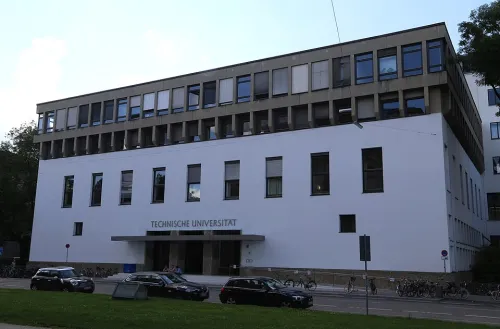
Physics (Applied and Engineering Physics)
Master

Über das Programm
▶ Den originalen englischen Text anzeigen
Allgemeine Voraussetzungen
Spezifische Voraussetzungen für dieses Programm sind noch nicht in unserer Datenbank. Die folgenden sind typisch für diesen Abschluss und diese Sprache in Deutschland — prüfe die genauen Voraussetzungen immer auf der offiziellen Programmseite.
Akademische Qualifikation
Ein anerkannter Bachelorabschluss in einem verwandten Fach; einige Programme verlangen eine Mindestnote oder bestimmte Voraussetzungen.
Sprache
Englischkenntnisse (typischerweise IELTS ~6,5 oder TOEFL iBT ~90). Grundkenntnisse in Deutsch sind im Alltag hilfreich.
Typische Unterlagen
- Anerkanntes Diplom und Notenübersicht (beglaubigte Übersetzungen)
- Sprachzertifikat
- Reisepass und Passfoto
- Tabellarischer Lebenslauf
- Motivationsschreiben (für viele Programme)
- Bewerbung über uni-assist / VPD (für die meisten internationalen Bewerber)
Welche Berufe eröffnet dieses Programm?
Verwandte Berufssuchen aus Daten der Bundesagentur für Arbeit (BERUFENET):
Alle Berufe entdecken →Fächer / Themenbereiche
Ähnliche Programme
Environmental Engineering
Rheinland-Pfälzische Technische Universität Kaiserslautern-Landau
Master of Science (M.Sc.)
Product Isolation
Hochschule Biberach
Master of Science (M.Sc.)
Mathematics international
Rheinland-Pfälzische Technische Universität Kaiserslautern-Landau
Master of Science (M.Sc.)
Mathematics
Georg-August-Universität Göttingen
Master of Science (M.Sc.)
Neurocognitive Psychology
Carl von Ossietzky Universität Oldenburg
Master of Science (M.Sc.)
Mechanical Engineering and Mathematics , M.Ed.
Technische Universität Berlin
Master of Education (M.Ed.)
Wie bewerbe ich mich für Physics (Applied and Engineering Physics) an der Technische Universität München?
Die meisten internationalen Bewerber bewerben sich über uni-assist (Dokumentenprüfung + APS für einige Länder). Bereite dein Abitur-/Bachelor-Diplom, Zeugnisse, Sprachzertifikat (DSH/TestDaF oder IELTS/TOEFL), Motivationsschreiben und Lebenslauf vor. Nicht-EU-Studenten benötigen für das Visum auch ein Sperrkonto (~11.904 EUR/Jahr).
- Anforderungen prüfen — Überprüfe, ob dein Abschluss anerkannt ist + erfülle die Sprach-/Notenschwellen.
- Sprachzertifikat erwerben — TestDaF / DSH für deutsche Studiengänge, IELTS / TOEFL für englische.
- Über uni-assist einreichen (Nicht-EU) — Dokumentenprüfung + APS, falls dein Land dies erfordert (China, Indien, Pakistan, Vietnam usw.).
- Direkt oder über das Uni-Portal bewerben — Einige Universitäten akzeptieren Direktbewerbungen — überprüfe die offizielle Programmseite.
- Sperrkonto eröffnen + Visum beantragen — Nach der Zulassung 11.904 EUR einzahlen, Krankenversicherung abschließen, Botschaftstermin buchen.
Häufig gestellte Fragen
Kurze Antworten zu Physics (Applied and Engineering Physics) an der Technische Universität München
Wird Physics (Applied and Engineering Physics) an der Technische Universität München auf Deutsch oder Englisch unterrichtet? ▼
Dieser Master Studiengang wird in Englisch unterrichtet. Stelle sicher, dass du die Sprachanforderungen (z.B. TestDaF, DSH, IELTS oder TOEFL) vor der Bewerbung überprüfst.
Wie viel kostet der Studiengang Physics (Applied and Engineering Physics)? ▼
6.000 EUR / Semester. Internationale Studierende sollten zusätzlich etwa 800–1000 EUR/Monat für Lebenshaltungskosten in Deutschland einplanen.
Was sind die Zulassungsvoraussetzungen für Physics (Applied and Engineering Physics) an der Technische Universität München? ▼
Typische Anforderungen sind: ein anerkannter Sekundar-/Bachelorabschluss, Nachweis der Sprachkenntnisse (Englisch) und (für Nicht-EU-Bewerber) eine uni-assist Bewerbung plus Finanzierungsnachweis (Sperrkonto ~11.904 EUR/Jahr).
Wann ist die Bewerbungsfrist? ▼
Die Bewerbungsfristen variieren: Das Wintersemester endet in der Regel am 15. Juli, das Sommersemester am 15. Januar. Bestätige die genaue Frist immer auf der offiziellen Universitätswebsite.
Kann ich während des Studiums von Physics (Applied and Engineering Physics) in Deutschland arbeiten? ▼
Ja. Internationale Studierende dürfen ohne zusätzliche Genehmigung bis zu 140 volle Tage / 280 halbe Tage pro Jahr arbeiten. Nach dem Abschluss kannst du eine 18-monatige Arbeitserlaubnis zur Jobsuche beantragen.
Wie bewerbe ich mich an der Technische Universität München — direkt oder über uni-assist? ▼
Die meisten deutschen Universitäten akzeptieren internationale Bewerbungen zur Dokumentenprüfung über uni-assist. Einige Universitäten akzeptieren Direktbewerbungen — überprüfe die Programmseite auf der offiziellen Website.