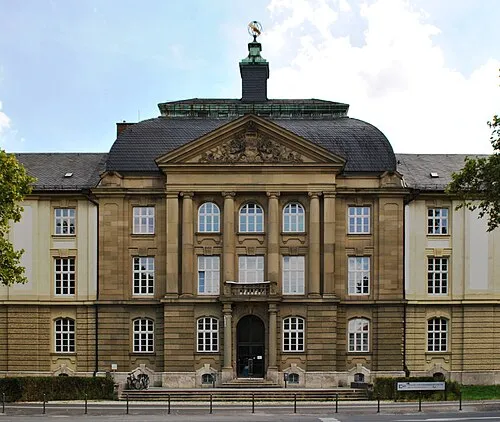
Geospheres - Geographic Science Approaches to Environmental Challenges
Master of Science (M.Sc.)

Über das Programm
▶ Den originalen englischen Text anzeigen
Welche Berufe eröffnet dieses Programm?
Verwandte Berufssuchen aus Daten der Bundesagentur für Arbeit (BERUFENET):
Alle Berufe entdecken →Fächer / Themenbereiche
Ähnliche Programme
Interreligious Studies
Universität Heidelberg
Master of Arts (M.A.)
Public History
Freie Universität Berlin, E-Medien
Master of Arts (M.A.)
Empirical Political and Social Research
Universität Stuttgart
Master of Arts (M.A.)
Jewish Theology
Universität Potsdam
Master of Arts (M.A.)
Mind, Brain and Behavior
Justus-Liebig-Universität Gießen
Master of Science (M.Sc.)
Vocational Education Nutritional Science and Home Economics
Hochschule Osnabrück
Master of Education (M.Ed.)
Wie bewerbe ich mich für Geospheres - Geographic Science Approaches to Environmental Challenges an der Julius-Maximilians-Universität Würzburg?
Die meisten internationalen Bewerber bewerben sich über uni-assist (Dokumentenprüfung + APS für einige Länder). Bereite dein Abitur-/Bachelor-Diplom, Zeugnisse, Sprachzertifikat (DSH/TestDaF oder IELTS/TOEFL), Motivationsschreiben und Lebenslauf vor. Nicht-EU-Studenten benötigen für das Visum auch ein Sperrkonto (~11.904 EUR/Jahr).
- Anforderungen prüfen — Überprüfe, ob dein Abschluss anerkannt ist + erfülle die Sprach-/Notenschwellen.
- Sprachzertifikat erwerben — TestDaF / DSH für deutsche Studiengänge, IELTS / TOEFL für englische.
- Über uni-assist einreichen (Nicht-EU) — Dokumentenprüfung + APS, falls dein Land dies erfordert (China, Indien, Pakistan, Vietnam usw.).
- Direkt oder über das Uni-Portal bewerben — Einige Universitäten akzeptieren Direktbewerbungen — überprüfe die offizielle Programmseite.
- Sperrkonto eröffnen + Visum beantragen — Nach der Zulassung 11.904 EUR einzahlen, Krankenversicherung abschließen, Botschaftstermin buchen.
Häufig gestellte Fragen
Kurze Antworten zu Geospheres - Geographic Science Approaches to Environmental Challenges an der Julius-Maximilians-Universität Würzburg
Wird Geospheres - Geographic Science Approaches to Environmental Challenges an der Julius-Maximilians-Universität Würzburg auf Deutsch oder Englisch unterrichtet? ▼
Dieser Master Studiengang wird in Englisch unterrichtet. Stelle sicher, dass du die Sprachanforderungen (z.B. TestDaF, DSH, IELTS oder TOEFL) vor der Bewerbung überprüfst.
Wie viel kostet der Studiengang Geospheres - Geographic Science Approaches to Environmental Challenges? ▼
Keine Studiengebühren (nur Semesterbeitrag). Internationale Studierende sollten zusätzlich etwa 800–1000 EUR/Monat für Lebenshaltungskosten in Deutschland einplanen.
Was sind die Zulassungsvoraussetzungen für Geospheres - Geographic Science Approaches to Environmental Challenges an der Julius-Maximilians-Universität Würzburg? ▼
Typische Anforderungen sind: ein anerkannter Sekundar-/Bachelorabschluss, Nachweis der Sprachkenntnisse (Englisch) und (für Nicht-EU-Bewerber) eine uni-assist Bewerbung plus Finanzierungsnachweis (Sperrkonto ~11.904 EUR/Jahr).
Wann ist die Bewerbungsfrist? ▼
Die Bewerbungsfristen variieren: Das Wintersemester endet in der Regel am 15. Juli, das Sommersemester am 15. Januar. Bestätige die genaue Frist immer auf der offiziellen Universitätswebsite.
Kann ich während des Studiums von Geospheres - Geographic Science Approaches to Environmental Challenges in Deutschland arbeiten? ▼
Ja. Internationale Studierende dürfen ohne zusätzliche Genehmigung bis zu 140 volle Tage / 280 halbe Tage pro Jahr arbeiten. Nach dem Abschluss kannst du eine 18-monatige Arbeitserlaubnis zur Jobsuche beantragen.
Wie bewerbe ich mich an der Julius-Maximilians-Universität Würzburg — direkt oder über uni-assist? ▼
Die meisten deutschen Universitäten akzeptieren internationale Bewerbungen zur Dokumentenprüfung über uni-assist. Einige Universitäten akzeptieren Direktbewerbungen — überprüfe die Programmseite auf der offiziellen Website.